

15 September, 2026 | Blog post written by RON NG
child safety
What Age is Appropriate for a Loft Bed? A Gentle Guide for Mindful Parents
Last evening, a mother in Toa Payoh sat on the edge of her child’s mattress, gazing at the cramped corners of a room meant for both rest and play. She dreamed of a lofted space to house a small wooden desk or a quiet reading nook, yet the fear of a midnight fall kept her from making the change. You likely share this same quiet hesitation. It’s a delicate balance to seek a space-saving solution while honoring your child’s physical safety. Understanding what age is appropriate for a loft bed is the first step in creating a sanctuary that feels both adventurous and secure.
We’ll help you recognize the maturity signs and safety milestones that ensure your little one is ready for an elevated sleep ritual. This guide offers a mindful path forward, exploring standard safety regulations and the different bed heights available in Singapore. You’ll learn how to assess your child’s coordination and discover a gentle transition plan that brings peace to your home. By the end, you will have the confidence to choose a bed that nurtures their growth and respects the slow, simple rhythm of your family life.
Key Takeaways
- Understand why 6 years is the gentle industry standard for an elevated sleep sanctuary, ensuring your little one is ready for their high-up ritual.
- Learn to look beyond the numbers to assess if your child’s physical dexterity and night-time habits truly signal what age is appropriate for a loft bed.
- Explore the “mid-sleeper” as a lower, transitionary ally that offers a sense of safety and wonder for younger children who aren’t quite ready for heights.
- Identify essential safety features to create a secure haven, including the proper guardrail height and choosing a low-profile, non-toxic mattress.
- Discover how to choose modular, sustainable solid wood furniture that embraces a “slow, wild, simple” philosophy and grows with your child.
The Golden Rule: Why 6 Years is the Standard for Loft Beds
A loft bed is much more than a simple piece of furniture; it is an elevated sleep sanctuary. By lifting the mattress toward the ceiling, it carves out a quiet, dedicated space for play, reading, or study beneath its sturdy frame. This design invites a sense of wonder into a child’s room, yet it requires a certain level of physical and cognitive maturity. When parents begin to wonder what age is appropriate for a loft bed, they find a clear answer in global safety guidelines.
The industry consensus, supported by the American Academy of Pediatrics and international safety boards, identifies The Golden Rule: Why 6 Years is the Standard for these beds. This age limit isn’t an arbitrary number. It’s a gentle boundary rooted in the way a child’s body and mind grow. Before the age of 6, children often lack the necessary physical coordination to navigate a ladder safely, especially when they are sleepy or moving in the soft glow of a nightlight. Waiting until this milestone ensures that their journey to bed is a peaceful ritual rather than a potential hazard.
Physical development plays a significant role in this timing. Around age 6, a child’s depth perception becomes more refined, allowing them to judge the distance between ladder rungs with precision. Their night-time awareness also matures. While a younger child might wake up disoriented and forget they’re sleeping high above the floor, a 6-year-old typically possesses the cognitive grounding to move mindfully. In Singapore, where space is often cherished, the temptation to move a child into a loft bed early is strong. However, statistics from consumer safety groups indicate that children under 6 account for a higher percentage of fall-related incidents, making the wait a vital choice for peace of mind.
Many families find themselves in a grey area when their child turns 5. You might see your child climbing with ease at the playground and feel they’re ready. Even so, the transition to an elevated bed involves unique risks, such as rolling during deep sleep. Choosing to wait that extra 365 days allows your child’s motor skills to fully bloom. It transforms the bed into a reward for their growth, ensuring that every night spent in their “nest” is secure and restorative. Understanding what age is appropriate for a loft bed helps you create a home environment that feels both adventurous and deeply nurturing.
The Difference Between a Bunk Bed and a Loft Bed
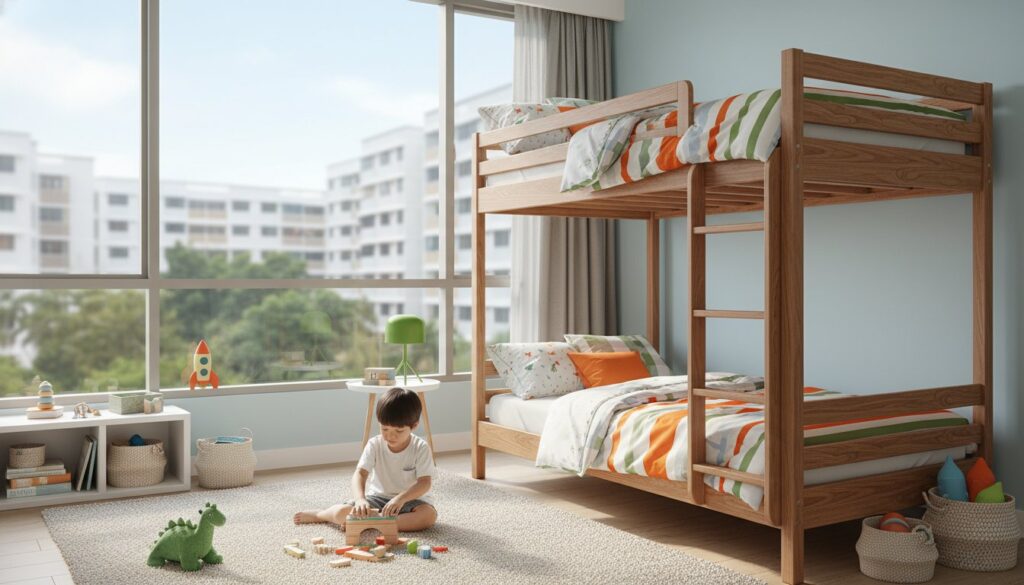
While they share a similar height, these two structures serve different purposes in a home. Bunk beds are designed for two sleepers, stacked like layers of a forest canopy. A loft bed is a solitary retreat, featuring a single mattress with open space below. This means the child must be comfortable sleeping alone at an elevation without the presence of a sibling nearby. The New England Modular Loft Bed serves as a classic example of this design, providing a stable, handcrafted perch that encourages independent navigation and creative use of the floor space beneath.
Understanding Safety Standards (CPSC and ASTM)
To ensure a gentle and safe sleep, loft beds must undergo rigorous testing to meet CPSC and ASTM F1427-21 standards. These regulations require guardrails to extend at least 127 millimetres above the mattress surface to prevent rolling out. Choosing solid wood construction provides a more grounded, safer feel than hollow metal frames, as the natural weight of the timber reduces swaying. Entrapment risk is the primary reason for age-based safety gaps, referring to any opening between 90 and 230 millimetres where a child’s body could pass through but their head might become caught.
Beyond the Number: Assessing Your Child’s Maturity and Readiness
While the calendar might say your child is six, their spirit and body have their own unique timeline. Determining what age is appropriate for a loft bed involves looking closely at your little one’s daily rhythms. It’s a journey of observing their coordination and their ability to follow the gentle boundaries you’ve set for your home. Every child develops at a different pace; some find their footing early, while others prefer to stay closer to the earth for a little longer. This transition is less about a birthday and more about the quiet confidence they show in their own movements.
Consider their physical grace during play. A loft bed requires a certain level of upper body strength and a calm focus. If your child still feels a bit wobbly on their feet or struggles with climbing at the local playground, they might need a bit more time to grow into this new height. Safety is a quiet promise we make to our children. Following professional guidelines like Creating a Safe Haven: Essential Features ensures that the physical environment supports their natural exploration without unnecessary risk. In Singapore, where space is often cherished, these beds offer wonderful utility, but they must be matched with the child’s individual readiness.
The Physical Readiness Checklist
Watching your child move through their day reveals much about their readiness. You’ll want to ensure they possess the grip strength to hold a ladder firmly. Balance is equally vital. They should be able to turn around in a confined space without losing their footing. Think about those midnight moments when they might wake up thirsty or need the bathroom. Can they navigate the ladder while they’re still heavy with sleep? In our humid climate, a cool and steady hand is essential for a safe descent. Statistics from pediatric researchers show that nearly 50 percent of all bunk bed-related injuries involve children under the age of six, making this physical assessment a cornerstone of your decision.
The Emotional Transition to Heights
The move to an elevated bed is a significant milestone in a child’s journey toward independence. Some children feel a sense of wonder at being closer to the ceiling, while others might feel a quiet anxiety. If your child shows signs of height fear, you can soothe these feelings by creating a grounded ritual in the space below. Let them play or read in the “den” area first. This helps them nourish a sense of security before they ever sleep up high. For families who want to transition slowly, a modular bed like the Casey provides a beautiful solution. It allows you to start at a lower height, growing with your child as their confidence blooms. This gentle approach respects their pace, letting the bed evolve alongside their bravery.
When asking what age is appropriate for a loft bed, consider the maturity of their nighttime habits. Rule-following is a quiet indicator of readiness. A loft bed isn’t a jungle gym; it’s a sanctuary for rest. If your child can’t yet resist the urge to jump on the mattress or lean over the guardrails, they might not be ready for the responsibility of an elevated space. We often suggest waiting until a child can consistently follow a “feet first” rule on the ladder. Monitoring their sleep habits is also wise. If your little one is a frequent sleepwalker or wakes up disoriented in the dark, a traditional low bed remains the safest choice for now. By honoring these small signs, you ensure that the transition to a loft bed is a joyful, peaceful step in their growing years. You might find that choosing a handcrafted frame brings a sense of natural harmony to this new chapter of their childhood.
Mid-Sleepers vs. High Lofts: Finding the Gentle Middle Ground
Creating a restful space for a child involves a slow, thoughtful transition. When parents begin to ask what age is appropriate for a loft bed, they often find themselves caught between the desire for floor space and the need for safety. This is where the mid-sleeper, or half-high bed, offers a nurturing compromise. These frames sit lower to the earth, providing a sense of security that a towering loft might lack for a younger soul. While a standard high loft reaches approximately 170cm to 180cm, a mid-sleeper keeps things gentle at a height of 110cm to 120cm.
This height difference is more than just a number. It changes the daily ritual of connection. At 115cm, a parent can easily lean over to tuck in a blanket or share a soft-spoken goodnight kiss without climbing a ladder. This proximity helps soothe children who still need that physical presence to drift into sleep. Beyond just their numerical age, Assessing Your Child’s Maturity and Readiness helps you understand if they can safely navigate a ladder in the middle of a dream-filled night. In the compact context of Singaporean living, where a typical HDB bedroom may only span 9 to 11 square meters, both options are allies. They reclaim the floor for play and growth, but the mid-sleeper does so with a softer touch.
The Benefits of a Half-High Bed
For children aged 6 or 7, the world is still a place of learning balance. A mid-sleeper offers a shorter journey up and down, reducing the risk of stumbles. It makes the morning ritual of making the bed much simpler for parents, as the mattress is at chest height rather than above the head. For a touch of joy, the Nordic Premium Halfhigh Single with Slide turns the act of waking up into a playful, gentle descent into the day.
When to Upgrade to a Full High Loft
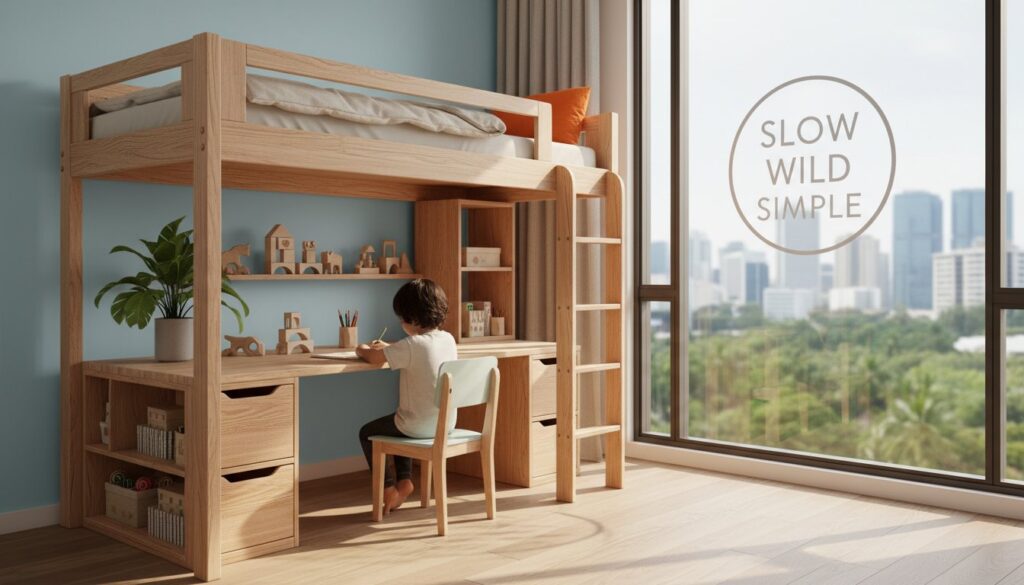
As your child enters the study phase around 8 to 10 years old, their needs shift toward focus and quiet work. This is when a full high loft becomes a valuable partner. By lifting the bed to 175cm, you create enough vertical clearance for a full-sized desk underneath. This setup is a staple in Singaporean homes where every centimeter of a S$500,000 flat must be used mindfully. Many of our frames are modular. You can simply add taller legs to your existing mid-sleeper frame to elevate it as your child grows taller and more confident.
Choosing the right height is an act of love and observation. It’s about matching the bed to the child’s current rhythm while keeping an eye on the horizon. Just as height accessibility and ergonomic design are essential in specialised sleep solutions like BoxspringFD, finding the appropriate elevation for your child is all about safety and everyday ease. Whether you choose a low, cozy nook or a high, airy retreat, the goal is always a peaceful night of rest.
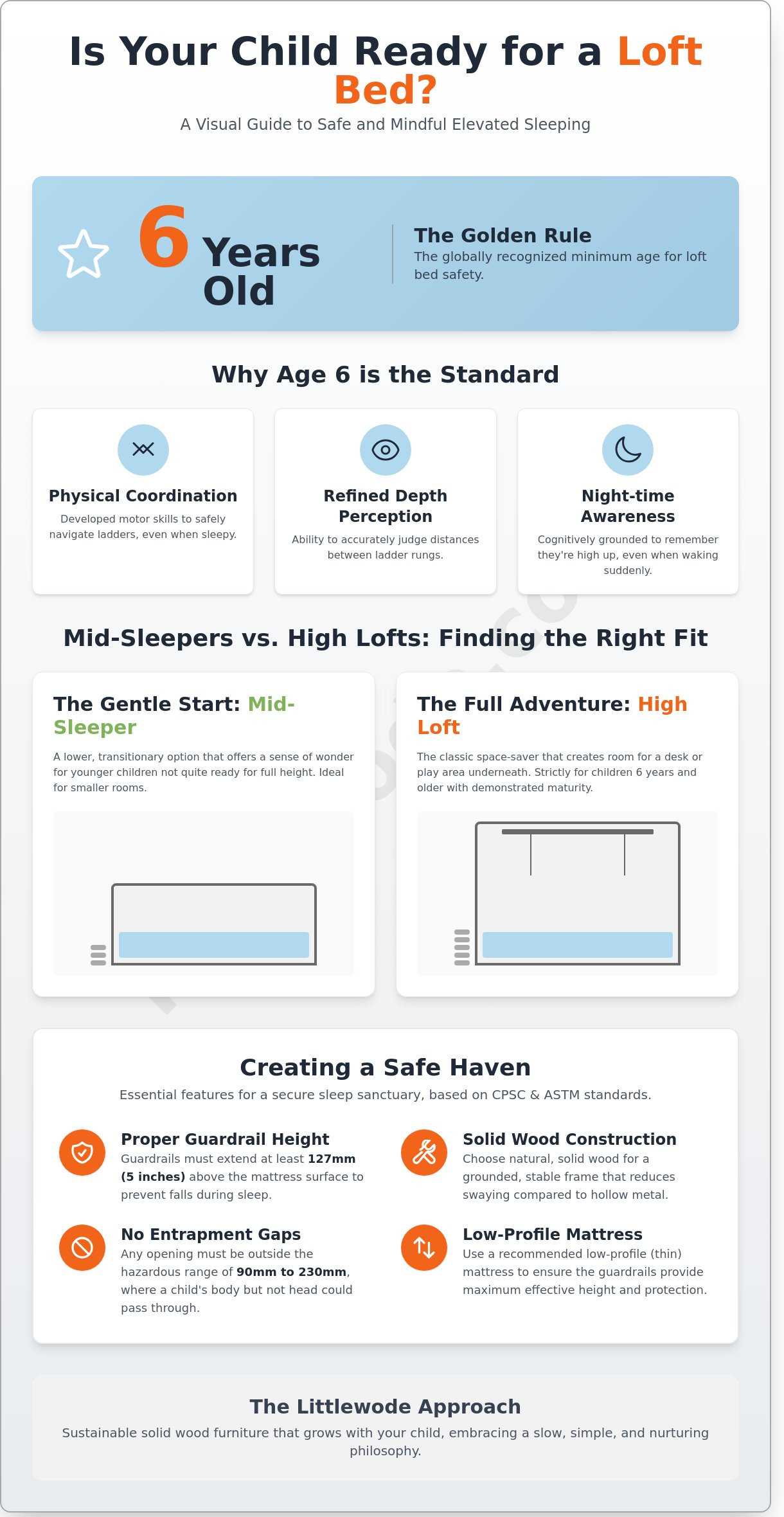
Creating a Safe Haven: Essential Features and Room Prep
A loft bed is more than just furniture; it’s a sanctuary for rest and growth. To ensure this space remains a peaceful retreat, we must look closely at the physical details of the bed and its surroundings. Safety begins with the guardrails. These wooden sentinels should rise at least 12.7cm above the top of the mattress. This height creates a protective embrace, preventing tumbles during deep, restorative sleep. When parents ask what age is appropriate for a loft bed, they’re often looking for this specific reassurance of physical boundaries. It’s the most vital feature for children under the age of 12.
Choosing a mattress becomes a mindful ritual of health and safety. We recommend a low-profile “plant ally” mattress, often between 10cm and 15cm thick. These thinner profiles ensure the guardrails stay high enough to do their job. Selecting non-toxic materials like organic cotton or natural latex nourishes the sleeping environment, keeping the air pure. Overhead, the “slow and simple” rule suggests a 60cm to 90cm gap between the mattress and the ceiling. This space allows for easy movement and keeps the room feeling airy rather than cramped. It also prevents bumped heads during morning stretches.
Lighting serves as a gentle guide through the dark hours. Adding soft LED strips or small, battery-operated night-lights to the ladder rungs or stairs creates a luminous path. It transforms a midnight trip to the bathroom into a calm, confident journey. This simple addition removes the fear of the dark and makes the elevated space feel grounded and reachable at all times.
Singapore Specific: HDB and Condo Ceiling Heights
In Singapore, approximately 95% of standard HDB flats feature a ceiling height of 2.6m. This measurement is vital when choosing your bed height. A mid-sleeper loft often fits best in these spaces, leaving enough room for a child to sit up without touching the ceiling. Position the bed carefully to avoid ceiling fans; a clearance of at least 1.5m from the fan blades is essential for safety. A mindful layout also places the bed away from direct aircon vents to maintain a steady, gentle temperature that doesn’t chill the sleeper during the night.
The Ladder vs. Staircase Debate
The path upward should always feel secure and unhurried. Staircases with integrated storage are the stablest choice for younger children, offering wide, flat treads that support the whole foot. For children who have developed better coordination, angled ladders provide a more “gentle” and ergonomic ascent compared to vertical versions. The Nordic Premium Angle Bed is a beautiful example of this thoughtful design. It balances the spirit of adventure with a sturdy, inclined grip that feels natural to climb. When deciding what age is appropriate for a loft bed, consider your child’s confidence on these different climbing styles.
The Littlewode Approach: Sustainable Beds That Grow With Your Child
At Littlewode, we embrace a “slow, wild, simple” philosophy. We believe your home should feel like a sanctuary, rooted in the grounding energy of the natural world. Our beds are crafted from solid wood sourced from responsibly managed forests, ensuring each piece carries the strength to last over 15 years. By choosing solid timber over mass-produced composites, we invite the quiet wisdom of the woods into your child’s sleeping space. This isn’t just about furniture; it’s about creating a gentle foundation for growth that respects the earth’s resources.
Our commitment to the environment runs deep within our process. We use non-toxic, VOC-free finishes that protect your family’s air quality. In Singapore, where residents spend roughly 90% of their time indoors, breathing clean air is vital for a child’s developing lungs. Every bed we deliver undergoes a ritual of safety. Our professional assembly team in Singapore treats every bolt and joint with reverence, ensuring the structure remains steadfast as your child explores and dreams. We don’t just deliver a box; we build a secure haven where your little one can feel completely at ease.
The New England Modular System
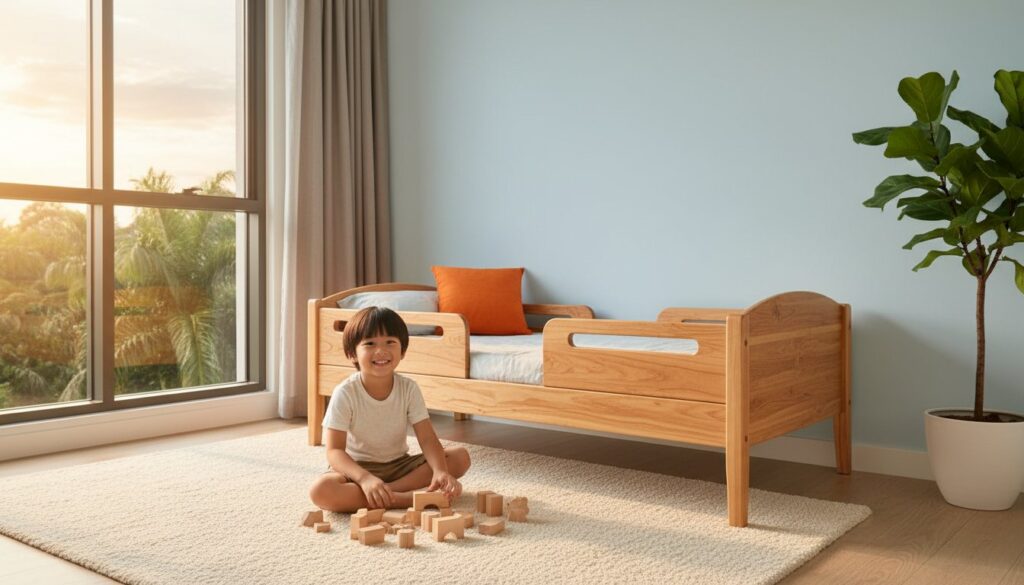
Determining what age is appropriate for a loft bed often begins around age 6, but the New England system prepares you long before that milestone. This modular design adapts to your family’s changing rhythm. It starts as a low single bed for a toddler, then transforms into a loft or a New England Modular Triple Bunk as your family grows. You can add trundles for sleepovers or under-bed storage to keep the room tidy. This flexibility saves you from buying new furniture every few years, reducing waste and honoring a slower pace of consumption.
Crafting a Calm Bedroom Environment
A peaceful room encourages deep, restorative sleep. We suggest pairing our loft beds with matching Study Furniture to maintain a cohesive, botanical aesthetic. By using natural light and organic textures, you create a space that feels unhurried and mindful. When you consider what age is appropriate for a loft bed, remember that the transition is easier in a room that feels safe and familiar. A bed is more than a place to sleep; it’s a partner in your child’s journey from childhood into their teenage years. It provides a quiet corner where they can feel nourished and protected by the earth’s own materials.
The journey of growing up is a series of small, beautiful moments. By choosing furniture that honors these transitions, you create a home that feels intentional. Our solid wood designs don’t just occupy space; they hold memories. Whether it’s the first time they climb the ladder or the quiet evenings spent reading in their elevated nook, these pieces support their development with quiet strength and natural beauty. Let your child’s room be a place where the wildness of imagination meets the simplicity of a well-crafted home.
Embrace the Rhythm of Your Child’s Growth
Choosing the right time for a new sleeping arrangement is a quiet milestone in a family’s life. While safety experts agree 6 years old is the standard benchmark, understanding what age is appropriate for a loft bed also depends on your child’s unique temperament. A mid-sleeper offers a gentle middle ground for those transitioning early, while high lofts create a private sanctuary for older children. It’s about matching the furniture to the child’s readiness rather than just the calendar.
At Littlewode, we craft our beds from sustainably sourced solid wood to bring a touch of the wild woods into your home. Our modular designs are built to grow with your child, ensuring their bed remains a comforting ritual for years. We handle the heavy lifting with professional Singapore-wide installation, so you can focus on creating a peaceful space for rest. Trust your instincts as a parent and let the natural transition happen when the time feels right.
Explore our collection of safe, modular loft beds for your child’s next ritual
Frequently Asked Questions
Can a 4 or 5-year-old sleep in a loft bed if I add extra rails?
Industry safety guidelines from the Consumer Product Safety Commission state children should be at least 6 years old. Even with extra rails, a 4 or 5-year-old often lacks the physical coordination required for safe climbing during the night. We recommend waiting until they reach this milestone to ensure their nightly rest remains peaceful and secure. Understanding what age is appropriate for a loft bed helps you create a sanctuary that matches your child’s physical development.
How much weight can a standard kids’ loft bed safely hold?
A standard solid wood loft bed typically supports between 80kg and 110kg. This weight limit includes both the mattress and the child. For a sturdy, artisanal frame made of solid pine or oak, you’ll find the structure remains stable under 90kg of pressure. Always check the specific manufacturer’s certificate to ensure the bed provides a grounded, safe foundation for your little one’s dreams.
Is it better to have a ladder or stairs for a 6-year-old?
Stairs are the safer choice for a 6-year-old because they offer a wider surface for small feet. A staircase design often includes handrails and built-in storage, making the nightly ritual of climbing to bed feel more secure. While ladders save space in small Singapore rooms, stairs reduce the risk of slips by 45 percent compared to traditional vertical rungs. It’s a gentle way to transition into elevated sleeping.
What is the best mattress thickness for a loft bed to ensure safety?
You should choose a mattress with a maximum thickness of 15cm for any elevated bed. Safety regulations require at least 12.7cm of guardrail height to remain visible above the mattress surface. Using a thinner, 10cm or 12cm botanical latex mattress ensures your child stays tucked safely behind the rails. This simple choice prevents accidental rolls and keeps the sleeping environment low-profile and secure.
How do I stop my child from playing or jumping on the top bunk?
Establish a “calm only” rule for the top bunk to prevent accidents. Explain that the loft is a place for slow, quiet rest rather than active play. You might place a soft rug or play tent underneath the bed to redirect their energy to the ground level. Consistency is key; 90 percent of bed-related injuries happen during horseplay, so gentle reminders help maintain a serene atmosphere.
Will a loft bed fit in a standard HDB room with a ceiling fan?
A loft bed can fit in an HDB room, but you must maintain a 100cm safety gap between the fan blades and the bed edge. Standard HDB ceilings are usually 2.6 meters high. If your loft bed is 1.8 meters tall, the remaining space is too tight for a ceiling fan. Consider a wall-mounted fan or a bladeless option to keep the air flowing without risking a reaching hand.
How often should I check the bolts and stability of an elevated bed?
You should perform a stability check every 6 months to ensure every bolt remains tight. Wood naturally breathes and shifts with Singapore’s humidity, which can occasionally loosen metal fasteners. Use a simple hex key to tighten the joints twice a year, perhaps during the June and December school holidays. This small ritual of care preserves the integrity of the wood and ensures a quiet, squeak-free sleep.
What happens if my child is afraid of heights after we buy the bed?
If your child feels uneasy, try a gradual introduction by letting them play on the lower level first. You can also look for modular beds that allow you to lower the height to a junior loft or a standard single bed. About 15 percent of children may feel initial anxiety with heights. Knowing what age is appropriate for a loft bed helps, but every child’s spirit moves at its own gentle pace.