

23 January, 2026 | Blog post written by RON NG
children's health
How to Pick the Right Study Table for Kids: A Parent’s Guide
Is your child’s study spot a makeshift corner of the dining table? Are you worried about the slouched shoulders and tired eyes that come after a long homework session? For many parents in Singapore, the challenge is twofold: finding a desk that supports good posture while also fitting into our often-compact living spaces. The search for the perfect study table for kids can feel overwhelming, with countless styles, features, and the fear of investing in something they’ll quickly outgrow.
Don’t worry, we’re here to make it simple. This guide is designed to cut through the confusion and empower you to make the best choice for your family. We’ll walk you through everything-from crucial ergonomic features that protect your child’s health to clever, space-saving designs perfect for any home. By the end, you’ll feel confident choosing a safe, durable, and comfortable desk that will support your child’s academic journey for years to come.
The Foundation: Why Ergonomics is Non-Negotiable for a Kids’ Study Table
When choosing a study table for kids, it’s easy to focus on aesthetics or size. However, the most critical factor for your child’s health and academic success is ergonomics. An ergonomically designed workspace isn’t a luxury; it’s the foundation for good posture, sustained focus, and healthy physical development. A child who is slumping, straining, or constantly fidgeting to get comfortable is a child who cannot concentrate effectively on their homework or creative projects.
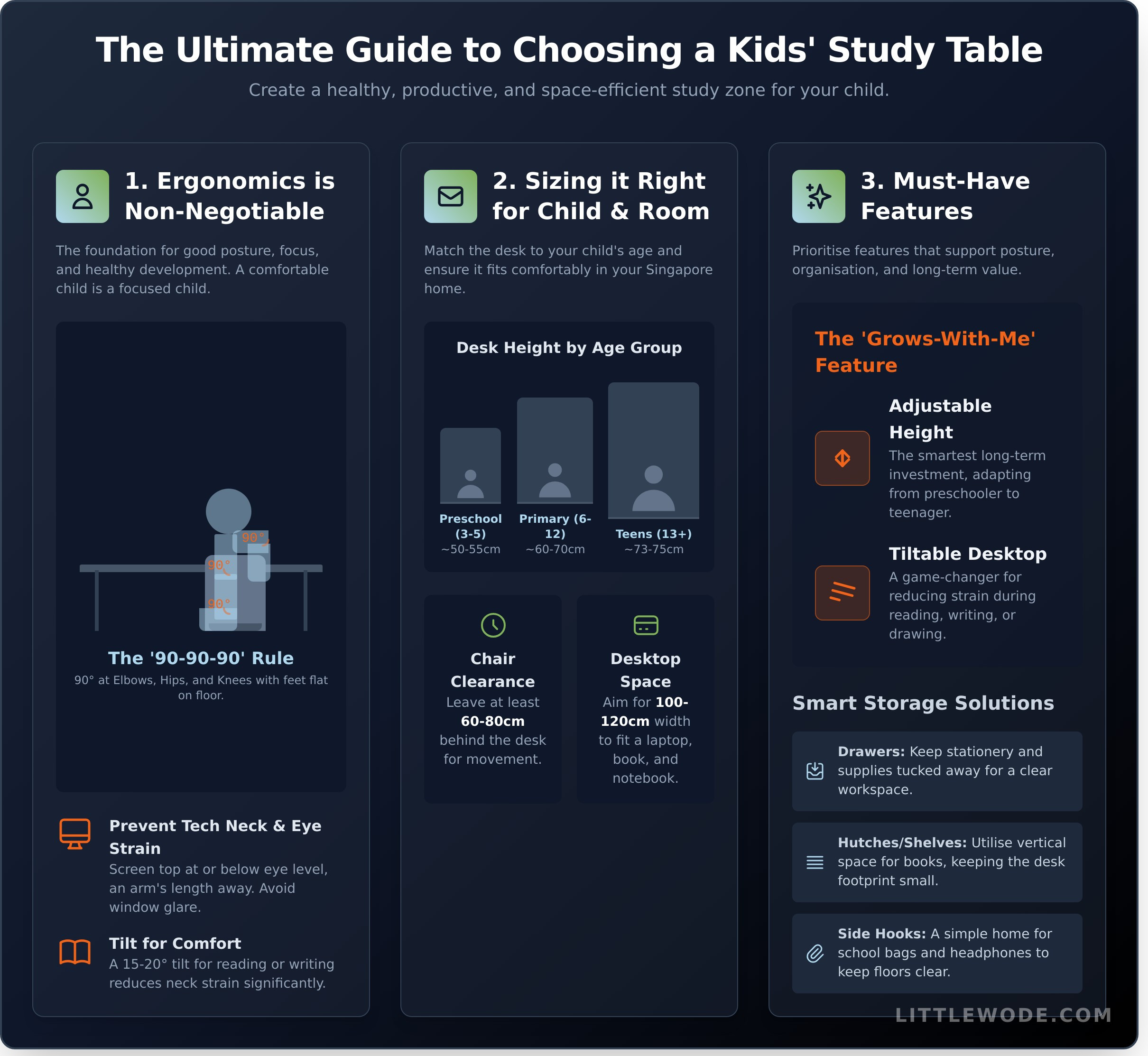
The goal is to create a setup that follows the ’90-90-90′ rule: a 90-degree angle at the elbows, knees, and hips, with feet flat on the floor. This posture supports the spine, reduces muscle strain, and promotes better blood circulation. Ignoring these fundamentals can lead to long-term issues like chronic back pain, neck strain, and headaches. These health problems are precisely what the scientific principles of ergonomics aim to prevent by fitting the environment to the user, not the other way around. Investing in an ergonomic study table is a direct investment in your child’s well-being and learning journey.
Getting the Height Right: Desk and Chair Synergy
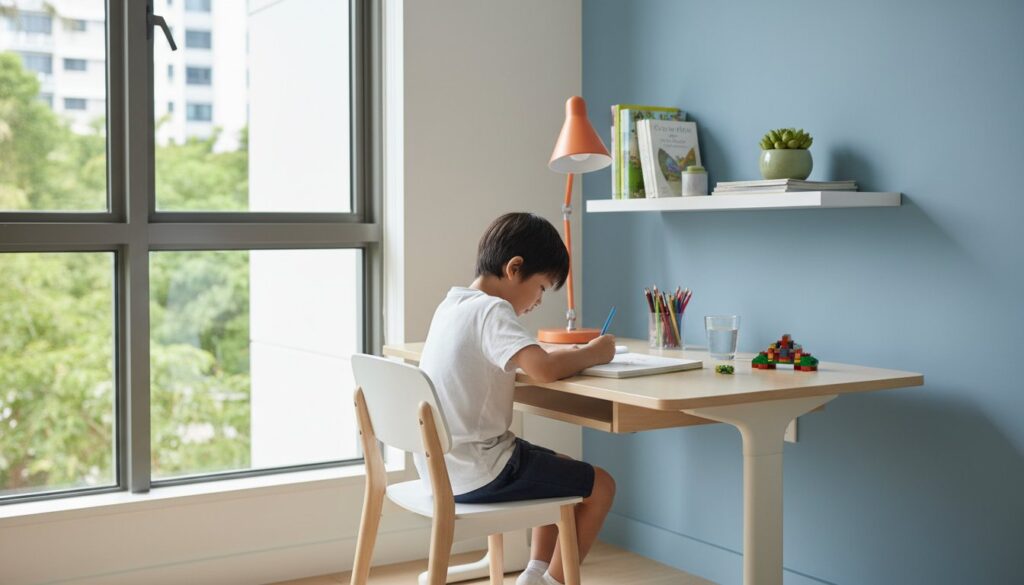
The perfect desk height is entirely dependent on your child’s chair and their current size. The two pieces work as a system. To find the right fit, have your child sit in their chair with their back straight. Their feet should rest flat on the floor (or a footrest) with their knees at a 90-degree angle. The desk surface should then be at a height that allows their elbows to rest comfortably at a 90-degree angle, with shoulders relaxed.
Preventing Tech Neck and Eye Strain
In today’s digital age, protecting your child’s eyes and neck is paramount. The top of a computer screen should be at or slightly below eye level, and about an arm’s length away. For reading books, a surface that can be tilted slightly (around 15-20 degrees) reduces neck strain and makes reading more comfortable. Also, consider placement within the room. Position the study table for kids so that bright light from a window or overhead lamp doesn’t cause glare on their screen or book, which can lead to eye fatigue.
Sizing it Up: Choosing the Right Dimensions for Your Child and Room
Before you start browsing, grab a measuring tape. The perfect study table for kids is one that fits both your child and your room. Measure the length and width of the available space, making a note of any nearby windows or power outlets. A common oversight is forgetting chair clearance; ensure you leave at least 60-80cm behind the desk so your child can move their chair in and out without feeling cramped. This simple step prevents the headache of returning a desk that’s just a few centimetres too big.
Matching Desk Size to Your Child’s Age Group
A child’s ergonomic needs change dramatically as they grow. While adjustable desks offer the best long-term value, here are some general guidelines for fixed-height tables:
- Preschoolers (Ages 3-5): A small, low table (around 50-55cm high) is ideal for colouring, puzzles, and play. The focus is on easy access and safety, not complex work.
- Primary School (Ages 6-12): As homework begins, they’ll need a larger surface for books and a writing pad. Look for a desk height of 60-70cm to match standard children’s chairs.
- Teenagers (Ages 13+): Their workload demands space for a laptop, textbooks, and project materials. A standard adult-sized desk (at least 120cm wide and 73-75cm high) is most suitable.
Planning for Your Space in Singapore (HDBs & Condos)
In compact HDB flats and condos, maximising space is crucial. Look for a study table for kids that incorporates vertical storage, such as a hutch or built-in shelving. This draws the eye upward and provides ample storage for books and supplies without increasing the floor footprint. Before finalising your purchase, always measure your lift, doorways, and corridors to ensure the desk (especially if it comes pre-assembled) can be delivered to the room without issue.
How Much Desktop Space is Enough?
A cluttered surface can hinder focus and learning. The ideal desktop should be large enough to accommodate a laptop, an open textbook, and a notebook simultaneously. A width of 100-120cm is a versatile size for most students. To keep the primary workspace clear, consider models with clever features like a pull-out keyboard tray or built-in cable management grommets. This helps maintain an organised environment conducive to concentration.
Must-Have Features: From Adjustability to Smart Storage
Beyond the colour and style, the true value of a study table for kids lies in its features. A well-designed desk not only provides a space for homework but actively supports your child’s posture, organisation, and focus. When choosing a desk, prioritise functional elements that will serve them well for years to come.
Adjustable Height & Tilt: The Ultimate ‘Grows-With-Me’ Feature
Children grow incredibly fast, and a standard desk can quickly become ergonomically unsuitable. An adjustable desk is the smartest long-term investment. Height-adjustable models can be lowered for a preschooler and raised for a teenager, ensuring their feet are always flat on the floor and their arms are at a comfortable 90-degree angle. Furthermore, a tiltable desktop is a game-changer for reducing neck strain. It can be angled for comfortable reading, drawing, or writing, promoting better posture during every activity. This adaptability means you won’t need to buy a new desk every few years, saving you significant money in the long run. See how Littlewode’s adjustable desks adapt to your growing child.
Integrated Storage: Shelves, Drawers, and Hutches
A cluttered desk leads to a distracted mind. Effective storage is crucial for keeping the study area organised and conducive to learning. In Singapore homes where space can be a premium, smart storage is key. Look for a study table for kids with integrated solutions like:
- Built-in Drawers: Perfect for tucking away stationery, notebooks, and craft supplies, keeping the main work surface clear for the task at hand.
- Hutches and Shelves: These utilise vertical space efficiently, providing a home for textbooks, reference materials, and even a few favourite trinkets without taking up a large footprint.
- Side Hooks: A simple but invaluable feature for hanging a school bag or headphones, keeping them off the floor and out of the way.
Essential Details: Cable Management and Surface Finish
The small details often make the biggest difference in daily use. With laptops, tablets, and desk lamps now standard, effective cable management is a must. Look for desks with built-in cable grommets (holes) or under-desk trays to keep wires organised and safely out of sight. The surface itself is also important. Opt for a durable, non-porous finish that is easy to wipe clean from ink stains or accidental spills. A matte, non-reflective surface is highly recommended as it minimises glare from overhead lights or windows, helping to reduce eye strain during long study sessions.
Materials & Safety: A Guide to Durable and Non-Toxic Options
Beyond ergonomics and design, the materials used in a study table for kids directly impact its durability, safety, and your child’s health. A well-built desk is a long-term investment in their learning journey, so understanding the difference between materials is crucial for making a wise purchase.
Solid Wood vs. Engineered Wood (MDF/Particleboard)
Solid wood, such as oak, maple, or pine, is the gold standard for children’s furniture. It is exceptionally durable, capable of withstanding years of homework, art projects, and daily use. While the initial investment might be higher, a solid wood desk can last through multiple children, offering excellent value for money. Furthermore, solid wood is a sustainable and natural choice. In contrast, engineered woods like MDF and particleboard are more budget-friendly but are susceptible to chipping and water damage-a significant concern in Singapore’s humid climate. Spills can cause the material to swell and warp, shortening the desk’s lifespan considerably.
Look for Non-Toxic, Kid-Safe Finishes
Many low-cost furniture pieces are finished with paints and lacquers containing Volatile Organic Compounds (VOCs). These chemicals can be released into the air, negatively impacting your home’s indoor air quality and potentially affecting your child’s health. Always prioritise a study table for kids that uses non-toxic, water-based paints and finishes. Look for labels like “zero-VOC” or “child-safe” to ensure you’re creating the healthiest possible study environment.
Safety First: Rounded Edges and Sturdy Construction
Structural safety is non-negotiable. Young children are active, and a poorly designed desk can pose a real hazard. Before buying, inspect the table for key safety features:
- Rounded Corners: Sharp edges are a common cause of bumps and bruises. Smooth, rounded corners are essential for preventing accidents.
- Sturdy Build: Give the table a gentle shake. It should feel solid and stable, with no wobbling or creaking. A sturdy frame ensures it won’t tip over easily.
- Safety Certifications: Look for products with certifications like GREENGUARD, which tests for low chemical emissions, providing an extra layer of assurance.
Prioritising these features ensures the desk is a safe and supportive addition to your child’s room. At Littlewode, all our furniture uses child-safe materials and is built with your child’s well-being as the top priority.
Investing in Their Future: The Final Word on Choosing a Study Table
Choosing the right study table for your child is more than just buying furniture; it’s an investment in their comfort, health, and academic journey. As we’ve explored, prioritising ergonomics is non-negotiable for supporting good posture, while considering adjustability and safe, non-toxic materials ensures you create a durable and healthy learning environment that lasts for years.
You are now equipped with the knowledge to select the perfect study table for kids. Ready to find a solution that ticks every box? Find the perfect, long-lasting study table for your child in our collection, thoughtfully crafted from sustainably sourced solid wood and finished with non-toxic, child-safe paints. Our ergonomic designs ensure the desk grows with your child, providing a safe and supportive foundation for their success. Give your child the dedicated space they deserve to learn, create, and thrive.
Frequently Asked Questions
At what age should I get my child their first proper study table?
Most children are ready for their first proper study table around the age of six or seven, when they begin Primary 1 in Singapore. This is when they start having regular homework and require a dedicated space. For preschoolers aged three to five, a smaller activity table is great for fostering creativity and good habits. The key is to provide a comfortable, ergonomically-sound workspace as soon as they need to sit and focus for structured learning tasks.
Is an expensive adjustable desk really worth the investment compared to a fixed one?
While an adjustable desk has a higher initial cost, often ranging from S$500 to S$900, it can be a worthwhile long-term investment. It grows with your child from primary school through their teenage years, ensuring correct posture at every stage. A fixed desk, typically costing S$150 to S$400, may need to be replaced every few years. Over a decade, the adjustable desk can prove more economical and is certainly better for your child’s ergonomic health.
How do I choose the right chair to go with a new study table?
The chair is just as important as the table. Look for an ergonomic, adjustable chair that allows your child to follow the “90-90-90” rule: feet flat on the floor with knees at a 90-degree angle, and elbows bent at 90 degrees when resting on the tabletop. Ensure there is adequate lumbar support. The chair and table must work as a system, so it is often best to purchase them together to guarantee a perfect ergonomic fit.
What’s the main difference between a children’s study table and a small adult desk?
The primary differences are ergonomics and safety. A dedicated study table for kids is designed for a child’s smaller frame, with lower height ranges and appropriate dimensions. They often feature rounded corners to prevent injuries, non-toxic paint finishes, and durable, easy-to-clean surfaces. A small adult desk, while compact, is built for adult proportions and may not provide the correct postural support or safety features necessary for a young child.
How can I set up the lighting correctly around my child’s study area?
Good lighting prevents eye strain. Combine general ambient room lighting with a dedicated task lamp on the desk. The lamp should have an adjustable arm and be placed on the opposite side of your child’s writing hand to minimise shadows-on the left for a right-handed child. Use a cool white LED bulb (around 4000K) that provides focused light without glare. This setup ensures the entire workspace is clearly and comfortably illuminated.
Are study tables with built-in hutches better than plain desks?
This depends on your space and organisational needs. A hutch offers excellent vertical storage, which is ideal for keeping books and stationery organised in smaller Singaporean rooms like HDB flats. However, it can sometimes make a desk feel cluttered. A plain desk provides a cleaner, more open workspace and offers flexibility to add wall-mounted shelves later. Consider your child’s personality-if they are easily distracted, a simpler desk might be better.