

6 January, 2026 | Blog post written by RON NG
baby cot
A Parent’s Guide to Choosing the Perfect Baby Cot in Singapore
Stepping into the world of parenthood in Singapore is a whirlwind of pure joy and… a surprising number of decisions. Few choices feel as monumental as selecting the perfect baby cot. The endless options, the confusing jargon, and the deep-seated worry about safety can turn what should be an exciting milestone into a stressful one. You’re not just buying furniture; you’re crafting your baby’s first sanctuary, a place for the sweetest dreams.
But what if that choice could be joyful, creative, and confident? This guide is designed to cut through the noise and empower you. From decoding essential safety standards to discovering stunning, convertible designs that grow with your child, we’ll cover everything you need to know. Consider this your roadmap to finding a beautiful, durable, and perfectly safe haven that offers unbeatable value and becomes a cherished part of your nursery. Let’s create that dreamy space together.
What is a Cot? Understanding the Centrepiece of Your Nursery
Welcome to the heart of your nursery! After those precious first few months in a cosy bassinet, the cot becomes your baby’s primary safe space for sleep and dreams. More than just a piece of furniture, a well-chosen cot is a long-term investment in your child’s comfort and a cornerstone for establishing healthy, independent sleep habits. A modern cot is designed with safety as the priority, featuring a sturdy frame, high slatted sides to prevent climbing, and often an adjustable mattress base. For a deeper dive into the history and specifics of this essential nursery item, you can explore the question of What is a Cot? in more detail. It’s the beautiful, secure centrepiece where your little one will grow, rest, and recharge for many months to come.
Cot vs. Crib vs. Bassinet: Decoding the Terminology
Navigating baby sleep products can feel like learning a new language! In Singapore and much of the world, the terms ‘cot’ and ‘crib’ are often used interchangeably to describe the same slatted-side bed. ‘Crib’ is more common in North America, but the product is essentially identical. The key difference lies between these and a bassinet.
- Bassinet: A small, basket-like bed designed for newborns (0-4 months). It’s portable, perfect for keeping your baby close in the early days, but is quickly outgrown.
- Cot: A larger, sturdier bed with high slatted sides, designed for babies from around 3-6 months up to 2-3 years. It’s a stationary piece of furniture built for long-term safety.
The typical journey is from the snug confines of a bassinet to the more spacious and secure cot once your baby becomes more active.
When to Transition Your Baby into a Cot
Knowing when to make the move from bassinet to cot is key. While the average age is between 3 and 6 months, it’s more important to watch for your baby’s developmental cues. It’s time to transition when they:
- Are approaching the bassinet’s weight or height limit.
- Can roll over, push up on their hands, or sit up. These new skills pose a safety risk in a shallow bassinet.
- Simply look too cramped and are waking more frequently.
To make the transition a joyful one, start by placing your baby in the cot for daytime naps. This helps them get used to the new space in a low-pressure way before committing to overnight sleeps.
Safety First: Non-Negotiable Standards for a Secure Sleep Space
While the design and colour of a baby cot bring joy to your nursery, nothing is more important than safety. Creating a secure sanctuary for your little one is the ultimate goal. In Singapore, reputable cots adhere to stringent international safety standards, such as the European EN 716, which are meticulously designed to prevent common hazards. Understanding these key features isn’t about causing worry; it’s about empowering you with the knowledge to choose a cot with confidence and enjoy complete peace of mind.
The Critical Mattress Fit and Support
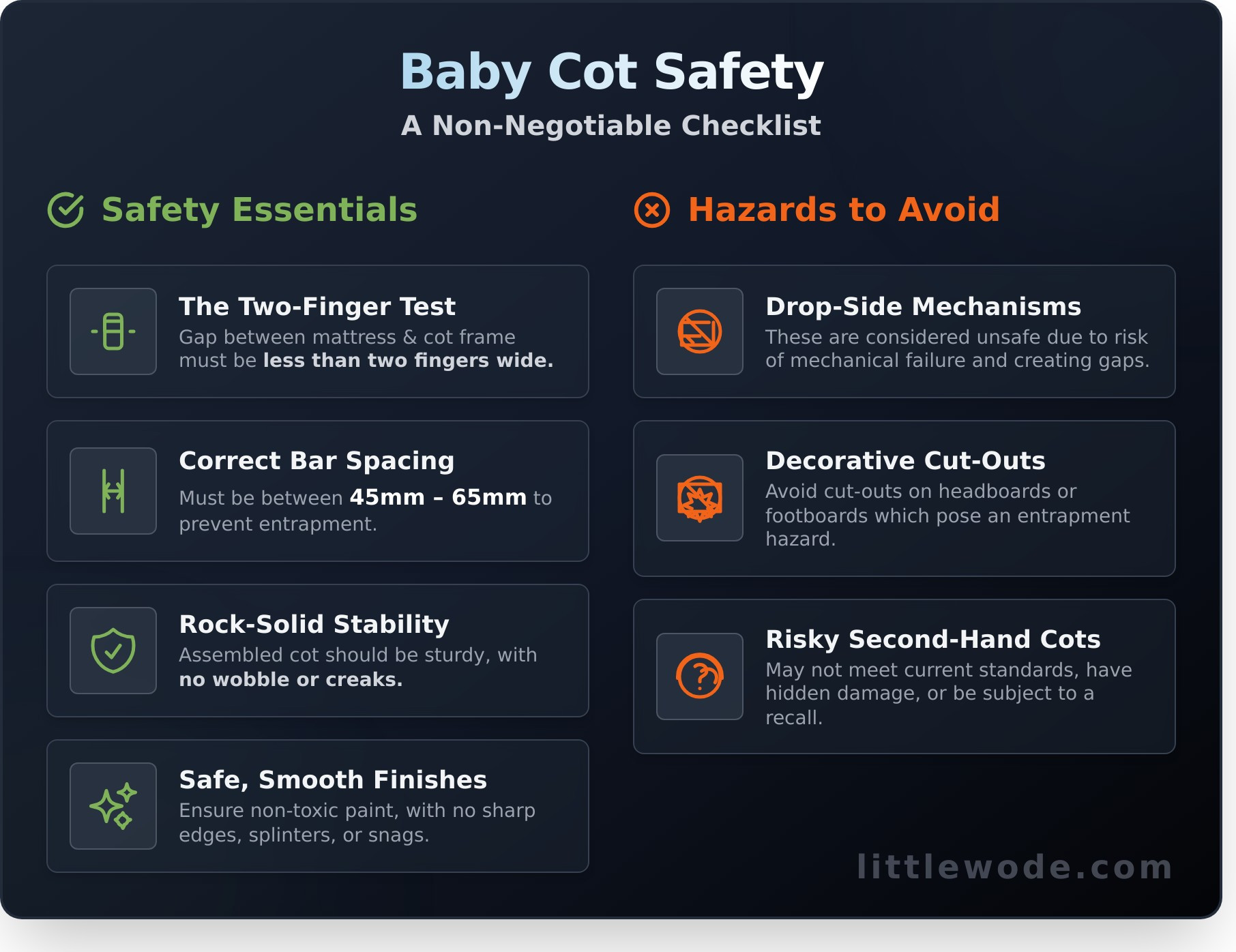
A snug and secure mattress is the foundation of a safe sleep environment. Always perform the ‘two-finger test’: you should not be able to fit more than two fingers between the mattress edge and the cot frame. A larger gap poses an entrapment risk. The mattress itself must be firm, flat, and new, as this is a key recommendation for reducing the risk of SIDS. Finally, check for a sturdy, well-ventilated mattress base that allows for healthy air circulation.
Structural Integrity: Bar Spacing, Finishes, and Stability
The very structure of the cot is crafted for safety. Pay close attention to these details, which are part of a global consensus on Non-Negotiable Safety Standards that protect your baby.
- Bar Spacing: The distance between cot bars must be between 45mm and 65mm. This specific range is designed to prevent a baby’s head from getting trapped.
- Safe Finishes: Ensure all surfaces are smooth, with no sharp edges, splinters, or parts where tiny clothes could snag. The paint and finish must be non-toxic and lead-free.
- Rock-Solid Stability: Once assembled, the cot should feel sturdy and stable. Give it a gentle shake-it should not wobble or creak.
What to Avoid in a Baby Cot
Just as important as what to look for is what to avoid. Steer clear of cots with features that are now considered unsafe:
- Drop-Side Mechanisms: These are now banned in many countries due to the risk of mechanical failure, which can create a dangerous gap. Always opt for a fixed-side design.
- Headboard and Footboard Cut-Outs: While they may seem decorative, cut-outs can pose an entrapment or snagging hazard. Solid ends are the safest choice.
- Risky Second-Hand Cots: An older, used cot may have an unknown history, hidden damage, or may not meet current safety standards. It could even be part of a product recall. Investing in a new, certified cot is the surest way to guarantee safety.
Finding Your Perfect Match: Exploring Different Types of Cots
Choosing a cot is more than just picking a piece of furniture; it’s about creating a safe and joyful first nest for your little one. From classic designs to clever, evolving pieces, the world of cots is designed to fit your family’s unique story, space, and long-term plans. Considering your needs from the start will help you find the perfect match for your home and lifestyle.
Standard Cots: The Classic and Simple Choice
The standard cot is the quintessential baby bed-a simple, sturdy, and safe enclosure with fixed sides. Its straightforward design is timeless and focuses on one thing: providing a secure sleeping space for your baby’s first two to three years. Regardless of the style, safety is paramount. In Singapore, all cots must comply with international safety standards as detailed in the Consumer Protection (Consumer Goods Safety Requirement) Regulations, ensuring peace of mind for every parent.
- Pros: Often the most affordable option, with a simple assembly and a classic, no-fuss aesthetic.
- Cons: A shorter lifespan, as your child will outgrow it once they begin to climb, requiring a new bed.
Convertible Cots (Cot Beds): An Investment That Grows With Your Child
A convertible cot is a masterpiece of smart, sustainable design-an investment that blossoms alongside your child. This versatile piece begins as a secure cot and, with a few simple adjustments, transforms into a charming toddler bed and sometimes even a stylish daybed. This philosophy of adaptable, long-lasting furniture is at the heart of what we do at Littlewode. By choosing a convertible cot, you’re not just buying a bed; you’re investing in a sustainable future and a piece of your child’s story. Explore our range of beautifully crafted convertible cots.
Space-Saving Solutions for Singapore Homes
Living in beautiful, compact Singapore means making every square metre count. For families in HDB flats or condominiums, space-saving cots offer brilliant solutions without compromising on safety. Mini cots are perfect for smaller nurseries or for keeping your baby close in your bedroom. For families on the move, a lightweight and foldable travel cot provides a safe, temporary sleep solution for holidays or visits to the grandparents’ home, proving that great design can fit into any space.
Essential Features to Compare Before You Buy
Once you’ve confirmed the basic safety standards are met, the real fun begins! This is where you move beyond the essentials and start building a wishlist for your dream cot. Looking closely at the product specifications will reveal thoughtful features that enhance day-to-day convenience, ensure long-term durability, and bring you greater peace of mind. Think of these details as the difference between a simple bed and a piece of heirloom-quality nursery furniture you’ll be proud of.
Material Matters: Solid Wood vs. Engineered Wood
The material of your cot is the foundation of its quality and healthiness. We champion solid wood (like pine, oak, or beech) for its unbeatable durability and natural beauty. It’s a sturdy, long-lasting choice that often uses non-toxic, low-VOC finishes, creating a healthier air environment in the nursery. Engineered wood, like MDF, is a common alternative, but it can be much heavier and may emit formaldehyde, a known irritant. For stunning craftsmanship and a healthier start, solid wood is the premium choice.
Adjustable Mattress Base Height
This is one of the most practical features a modern cot can offer. An adjustable base allows you to change the height of the mattress, growing with your child and saving your back! The benefits are two-fold:
- Newborn Stage (High Position): The mattress is raised, making it easy to lift your baby in and out without deep bending.
- Sitting & Standing Stage (Low Position): As your baby learns to pull themselves up, you lower the base to prevent them from climbing out, ensuring they remain safely inside.
Protective Teething Rails
It’s an inevitable milestone: your curious little one will eventually chew on their cot rails. A thoughtful design anticipates this! Protective teething rails are non-toxic plastic guards that fit securely over the top edges of the cot. This clever feature protects your baby’s delicate new teeth and sensitive gums while also preserving the beautiful wood finish from bite marks. It’s a small detail that signals superior quality and a commitment to longevity.
Considering these features will help you select a beautiful, functional, and safe centrepiece for your nursery. Discover stunning examples of thoughtful design in our collection of sustainably made cots.
Completing Your Nursery: Cot Setup and Essential Accessories
You’ve chosen the perfect cot, the beautiful centrepiece of your nursery. Now it’s time to bring the whole sleep space to life! Think of your cot not as a standalone item, but as the heart of a safe sleep ecosystem. Creating this nurturing environment is a joyful final step, ensuring every detail is designed for your baby’s comfort and, most importantly, their safety.
Choosing the Right Cot Mattress
The mattress is your cot’s most crucial partner. Health authorities in Singapore and around the world agree on two non-negotiables: it must be firm and it must fit perfectly, with no gaps between the mattress edge and the cot frame. For materials, you can choose from lightweight foam, durable innerspring, or breathable natural fibres. A waterproof, yet breathable, mattress protector is a parent’s best friend for inevitable spills.
Safe Bedding: The ‘Less is More’ Approach
When it comes to cot bedding, simplicity is safety. A single, well-fitting fitted sheet is all you need. To create the safest sleep space, you must avoid clutter. Health experts strongly advise against adding these items to your baby’s sleep area:
- Pillows and duvets
- Bumpers (even breathable mesh ones)
- Loose blankets or quilts
- Soft toys or comforters
For a safe and cosy alternative to blankets, a baby sleeping bag is an award-winning solution that keeps your little one at a comfortable temperature without any risks.
Optimal Cot Placement in the Nursery
Where you place the cot can make all the difference in creating a tranquil haven. Find a quiet corner of the room that is free from hazards. Always position the cot away from windows, blinds, and any dangling cords. It’s also vital to ensure it is not placed directly against radiators or near heaters to prevent overheating. This careful placement helps craft a peaceful and secure spot, setting the stage for restful sleep and sweet dreams.
With these simple, safety-first principles, your nursery becomes a beautiful and secure sanctuary. Explore our collection of sustainably made nursery essentials to find the perfect finishing touches for your little one’s room.
Your Journey to the Perfect Sleep Space
Choosing a baby cot is one of the most exciting decisions you’ll make when preparing for your new arrival in Singapore. Remember the golden rules: uncompromising safety standards always come first, followed by a style that suits your space and a design with features that support your family’s lifestyle. This isn’t just a purchase; it’s about creating a secure, comfortable, and beautiful centrepiece for your nursery where countless precious memories will be made.
At Littlewode, we blend creative passion with proud craftsmanship to help you build that dream space. We believe a cot should be a long-term investment in your child’s well-being. That’s why our award-winning designs are crafted from high-quality, sustainably sourced solid wood and finished with non-toxic, child-safe paints. Best of all, they are designed to convert and grow with your child, transforming from a cot to a toddler bed and beyond, ensuring years of joyful use.
Ready to find the perfect centrepiece for your nursery? Discover Littlewode’s collection of safe and sustainable cots and start building a beautiful sleep haven for your little one.
Frequently Asked Questions About Cots
How long can my baby safely use a cot?
Your little one can enjoy their cosy cot until they are between two and three-and-a-half years old. The most important signal for transitioning is safety, not age. Once your child begins to attempt climbing out, or when the height of the top rail is less than three-quarters of their height, it’s time to move them to a toddler bed. This ensures their sleep space remains a safe and secure haven as they grow more adventurous.
Are second-hand cots a safe option to save money?
While we appreciate a savvy purchase, we urge caution with second-hand cots. Older models may not meet Singapore’s current, rigorous safety standards for things like bar spacing and non-toxic paint. Structural integrity can also be a concern, with potential for loose screws or weakened joints. If you do choose a pre-loved frame, inspect it meticulously and always invest in a brand-new, perfectly fitting mattress to ensure a safe sleep environment for your baby.
What is the standard cot mattress size in Singapore?
In Singapore, you will commonly find two standard sizes for cot mattresses: 120cm x 60cm and 130cm x 70cm. The most critical factor is ensuring the mattress fits your cot snugly, leaving no gaps. A simple safety check is the two-finger rule; if you can fit more than two fingers between the mattress and the cot frame, the mattress is too small and poses a safety risk. Always measure your cot’s internal dimensions before purchasing.
Do I really need to avoid cot bumpers? I see them everywhere.
Yes, you absolutely should. Despite their popular appearance in styled nurseries, safe sleep experts and health authorities strongly advise against using cot bumpers. They pose a serious risk of suffocation, strangulation, and overheating. Furthermore, as your baby gets older, bumpers can provide a foothold for them to climb out of the cot. A beautifully crafted cot with safely spaced bars is all you need for a secure and breathable sleep space.
At what age or stage should I lower the cot’s mattress base?
You should lower the cot’s mattress base to match your baby’s developmental milestones. Start with the highest level for your newborn. As soon as your baby shows signs of pushing up on their hands and knees or can sit up independently (usually around 4-6 months), it’s time to lower it to the middle or lowest setting. You must lower it to the very lowest position before they can pull themselves up to a standing position.
Can I assemble the cot myself or do I need a professional?
Our cots are designed with stunning craftsmanship for straightforward self-assembly, making it a joyful project for expecting parents. Each comes with detailed instructions to guide you. However, if you prefer complete peace of mind or are short on time, professional furniture assembly services are widely available in Singapore. You can expect to pay between S$80 to S$150 for an expert to ensure every bolt is perfectly in place for your little one’s safety.