

23 April, 2026 | Blog post written by RON NG
child wellness
A Guide to Choosing a Study Table: Creating a Space for Focus and Calm
In the gentle hum of our Singaporean homes, creating a quiet corner for your child to learn and grow can feel like a delicate challenge. Perhaps their current space feels cluttered, their focus wanders, or you worry if their little desk truly supports their growing body and curious mind.
Choosing a study table is more than a simple purchase; it is a mindful act of creating a sanctuary. A dedicated space, crafted from safe, natural materials, can become a grounding anchor for their daily ritual of discovery. It’s about nourishing their ability to focus and find calm amidst the day’s activities.
This gentle guide is here to walk with you. We will explore how to select a piece that not only fits beautifully into your space but also nurtures your child’s posture and well-being for years to come. Together, let’s create an inviting nook that encourages focus, turning study time into a peaceful, cherished part of their day.
The Heart of a Study Space: Why the Right Table Matters
In the quiet corner of a child’s room, a study table is more than a simple surface for books and pencils. It is a sacred space, a gentle anchor for their world of learning. This dedicated place for thought helps to create a ritual around study, transforming it from a chore into a calm, focused practice. An organised desk quietly mirrors an organised mind, creating a clear, uncluttered canvas for new ideas to flourish. It also sets the foundation for nurturing healthy posture and mindful habits that will support them for years to come.
More Than Just Furniture: A Place for Growth
Providing your child with their own workspace is a quiet act of trust. It gives them a sense of ownership and encourages a gentle blossoming of independence. This personal space, a place to call their own, is where they learn to care for their tools and their thoughts. The concept of a personal desk has deep roots; The history of the study table reveals its journey into becoming a centre for learning. A beautiful, simple table evolves with them-from a canvas for crayon drawings to a steady companion for exam preparation, nourishing their growth at every stage.
The Ritual of Study: Crafting a Peaceful Habit
Creating a dedicated study spot helps a child’s mind understand when it is time to focus. Unlike the busy energy of a dining table, their own study table becomes a signal for concentration, a quiet invitation to begin. This separation helps to minimise distractions and build a positive, peaceful association with learning. It is here that a beautiful ritual can form: sitting down, arranging their books, and entering a calm state of mind. This simple, repeated act helps to craft a habit of focus that feels natural and serene, not forced, laying the groundwork for a lifetime of mindful learning.
A Gentle Guide to Study Table Types and Styles
Choosing a study table is a quiet ritual. It is about finding a piece that feels like a natural part of your home, one that supports your child’s journey with grace and simplicity. Moving beyond fleeting trends, we can focus on timeless forms that honour the flow of a room and the rhythm of daily life. The right table should feel like a gentle whisper in the space, matching its calm aesthetic and nurturing a sense of peace.
The Simple Writing Desk: A Minimalist’s Haven
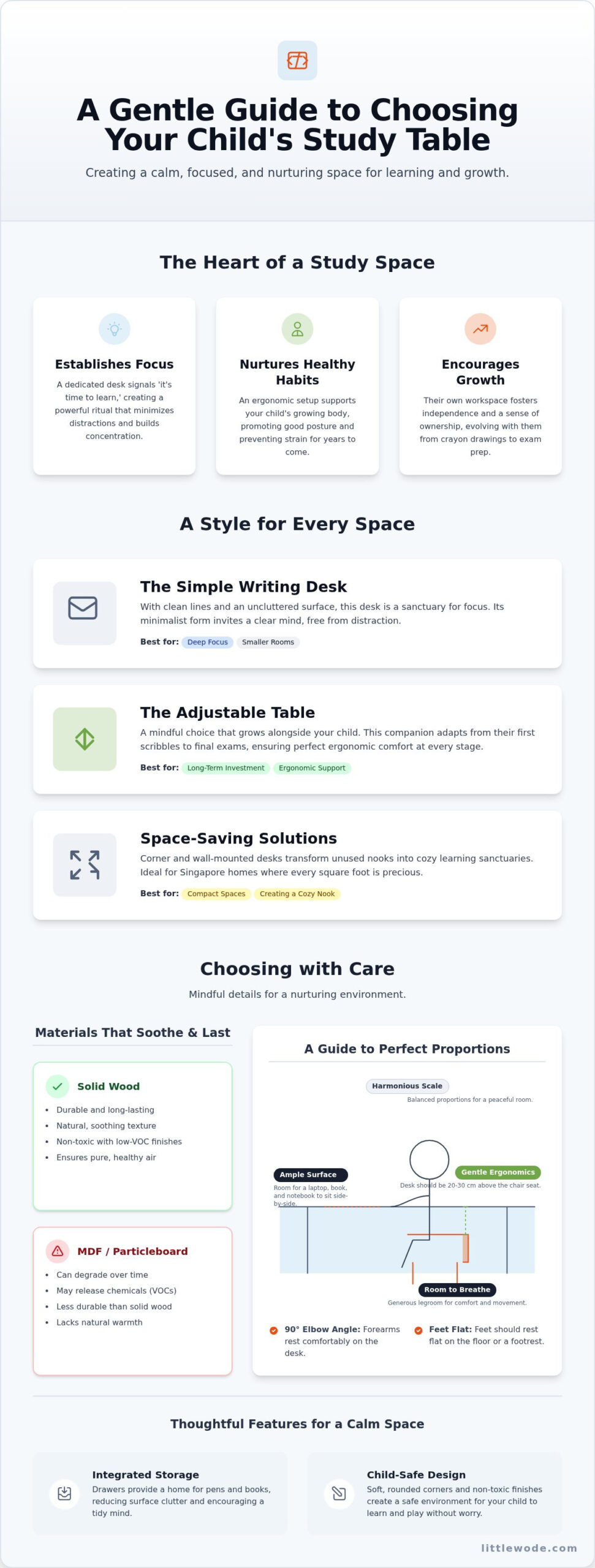
For tasks that ask for deep focus, the simple writing desk is a sanctuary. Often crafted with clean lines and the honest grain of natural wood, it offers an uncluttered surface that invites a clear mind. Its form encourages tidiness, creating a dedicated space for thought to unfold without distraction. In smaller rooms where every piece should breathe, this desk brings function and serenity without overwhelming the space.
The Adjustable Table: A Companion for Growing Years
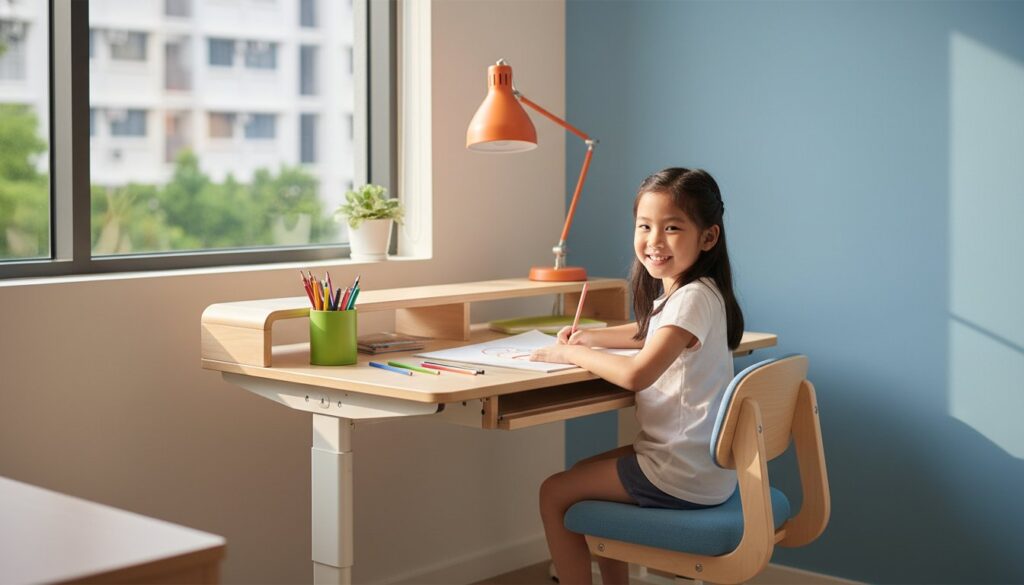
A truly mindful choice is a table that adapts and grows alongside your child. An adjustable study table is a quiet companion, nurturing your child from their first drawings to their later studies. Ensuring the surface meets their elbows at a comfortable angle is vital, a principle supported by established ergonomic guidelines for desks that help build a foundation for healthy habits. This is a gentle investment in their long-term well-being, a piece that serves them faithfully through every chapter.
Space-Saving Solutions: Corner and Wall-Mounted Desks
Honouring the space you have is a beautiful form of intention, especially in many Singapore homes where every square foot is precious. A corner desk can transform an unused part of a room into a defined, cosy nook for learning. Wall-mounted desks float above the floor, lending an airy, open feel to a room. This thoughtful use of space helps maintain a sense of calm and freedom, ensuring your child’s sanctuary remains a place of rest and inspiration.
Choosing with Care: Materials, Size, and Key Features
A child’s study space is a sanctuary for thought and growth. Choosing their desk is about more than just function; it’s about mindfully creating a nurturing environment. The materials, size, and features of their study table all play a gentle part in shaping a calm, focused atmosphere where learning can unfold naturally.
Materials that Soothe and Last: The Beauty of Solid Wood
Solid wood brings a quiet warmth and a connection to nature directly into your child’s room. Its natural grain is a gentle story told by the earth, and its texture is soothing to the touch. Unlike MDF or particleboard, which can degrade and release harmful chemicals over time, a piece crafted from solid wood is a durable, long-lasting companion for their entire learning journey. We believe in using only non-toxic, low-VOC finishes, ensuring the air your child breathes remains pure and healthy.
Finding the Right Proportions: A Guide to Sizing
A well-proportioned desk invites comfort and ease, feeling like a natural extension of your child’s world. To find the perfect fit, consider these gentle guidelines:
- Ample Surface: The tabletop should offer enough space for a laptop, an open book, and a notebook to rest side-by-side, allowing for an uncluttered workflow.
- Gentle Ergonomics: For healthy posture, the desk surface should sit about 20-30 cm above the height of their chair’s seat.
- Room to Breathe: Ensure there is generous legroom and space for a comfortable chair to tuck in neatly, fostering a sense of openness.
- Harmonious Scale: The piece should feel balanced within the room, contributing to a feeling of peace and order.
Integrated Storage: A Home for Everything
A calm mind often begins with a calm space. A thoughtful study table with integrated drawers offers a gentle solution to surface clutter, providing a home for every pen, paper, and book. Keeping essentials within reach but out of sight helps your child maintain focus and encourages a simple ritual of tidying up after each study session. This small habit nurtures a sense of responsibility and peace. To see how these principles come to life, explore our thoughtfully designed study tables.
Ergonomics for All Ages: A Gentle Approach to Healthy Posture
Ergonomics sounds like a complex word, but its heart is simple and kind. It is the gentle art of creating a space that fits your child’s body naturally, allowing them to learn and dream without strain. This isn’t about enforcing a stiff, rigid posture, but about inviting a soft, relaxed one. A well-designed study table setup becomes a quiet ally in their educational journey. By making small, mindful adjustments, we can nurture their focus and protect their developing back, neck, and eyes for many years of happy learning.
Finding the Perfect Height for Desk and Chair
Creating harmony between your child’s chair and their desk is a beautiful ritual of care. It is about finding a natural equilibrium where their body feels supported and at ease, allowing their energy to flow into their work, not into holding an uncomfortable position. Watch for these simple signs of a comfortable fit:
- Grounded Feet: Their feet should rest flat on the floor or a small footrest, feeling connected to the earth. This sense of stability is calming for the mind.
- Gentle Angles: Look for soft, open angles at the knees and elbows, close to 90 degrees. Their arms should rest on the table without hunching their shoulders.
- Soft Gaze: The top of their book or screen should be at or just below eye level, allowing their neck to remain long and relaxed.
The Role of a Supportive Chair
A good chair is the study table’s most essential partner. Think of it as a gentle, steady hug for your child’s back while they read and create. Look for a chair that offers kind support that follows the natural curve of their spine, especially the lower back. It is so important that your little one’s feet can touch the floor, which helps them feel stable and secure in their space. Perching on a wobbly stool or sinking into an oversized adult chair can create restlessness and strain, pulling their attention away from their tasks.
Creating this nurturing environment is a slow, thoughtful process. It’s an investment in your child’s well-being and their quiet moments of discovery. Explore our collection of thoughtfully crafted furniture to find pieces that grow with your child.
Crafting a Calm Study Corner: Beyond the Table Itself
A beautiful study table is the heart of a child’s learning space, but the soul is found in the calm and quiet that surrounds it. Creating this sanctuary is a gentle ritual in itself. It’s about crafting a nook that feels safe, inviting, and deeply nourishing for a young, curious mind-a space where thoughts can unfold without distraction, turning learning into a peaceful pursuit.
The Importance of Gentle Lighting
Position the desk to welcome the soft, natural light of a Singapore morning, avoiding the harsh glare that can tire young eyes on screens. As evening draws in, a simple desk lamp with a warm, gentle glow provides focused light that soothes rather than strains. Good lighting is a quiet act of care, helping to preserve energy and encourage focus during long study sessions, making the space feel warm and protective.
Keeping the Space Tidy and Calm
A calm space begins with gentle order. Simple wooden trays for pens and soft-woven baskets for papers can bring a sense of peace to the surface. Encourage a quiet ritual at the end of each day: clearing the desk, leaving only the essentials. This simple act creates a clean slate for the morning, free from the clutter of yesterday. To help maintain this sense of harmony, consider pairing your table with matching bookshelves and storage, creating a complete and cohesive haven for learning.
Personalizing the Nook Mindfully
Personal touches should be added mindfully, like whispers of inspiration. A small, hardy succulent to bring a touch of green life, or a simple cork pinboard for treasured drawings and encouraging notes. The goal is not to fill the space but to infuse it with gentle encouragement. Avoid sensory overload; this small corner is meant to be a quiet retreat. A single piece of calming art can do more to inspire than a dozen distracting toys.
By thoughtfully considering light, order, and gentle inspiration, you transform a functional study table into a true sanctuary. It becomes more than a place for homework; it becomes a nurturing ground for creativity, concentration, and calm, supporting your child’s journey in the most heartfelt way.
A Gentle Foundation for Learning and Growth
Creating a space for learning is a gentle, thoughtful ritual. It begins with the understanding that the right study table is more than mere furniture-it is the very heart of a calm and focused sanctuary. By mindfully considering its size, the natural feel of its materials, and its gentle support for healthy posture, you are crafting a true foundation for quiet contemplation. This anchor, combined with a serene and uncluttered environment, creates a personal haven for growth.
If you are seeking a piece that embodies this philosophy of slow, simple living, we invite you to explore our collection of timeless, solid wood study tables. Each table is mindfully crafted from sustainable solid wood, bringing a piece of nature indoors. They are finished with non-toxic, child-safe coatings to protect your loved ones, and thoughtfully designed in Singapore for homes that value calm and enduring quality.
May the sanctuary you create become a cherished space for peaceful work and gentle discovery.
Frequently Asked Questions
What is the best material for a study table for children?
For a child’s learning space, natural materials like solid wood are gentle and enduring. They bring a calming piece of the earth indoors and are free from the harsh chemicals often found in plastics. Good quality engineered wood with a low-VOC finish is another thoughtful choice. These materials create a sturdy, nourishing foundation for your child’s learning journey, built to last through years of discovery and growth.
How do I choose the right size study table for a small bedroom?
To find a peaceful fit for a small Singaporean bedroom, begin by measuring the nook you have in mind. Consider a corner desk to make gentle use of the space, or a wall-mounted desk to create a sense of openness. Look for simple, slender designs, perhaps with a single drawer or shelf. This ensures the room remains a restful haven, with a dedicated corner for quiet focus and creativity.
Is an adjustable height study table worth the investment?
An adjustable height table is a truly mindful investment. It grows alongside your child, supporting a healthy posture through every stage of their development. While the initial cost may be higher, perhaps starting from S$300, its lasting value means you are choosing one beautiful piece instead of several over the years. This slow, simple approach honours both your child’s well-being and a more sustainable way of living.
How can I make my child’s study area more organized and inviting?
Create a calm and inviting study corner with gentle touches from nature. Use simple wooden organizers for pencils and books. A soft, warm lamp can soothe the eyes and the spirit. Place a small, easy-care plant nearby to bring a bit of the outdoors in, connecting them to nature’s quiet wisdom. This simple ritual of keeping their area tidy and beautiful helps to nurture focus and a love for learning.
What is the ideal height for a study table and chair?
The ideal height allows your child to sit with their feet flat on the floor and their knees bent at a gentle 90-degree angle. Their elbows should also rest comfortably at a 90-degree angle on the tabletop. For most primary school children, the ideal height for a study table is around 55-70 cm, but an adjustable set is always the most nurturing choice, as it can be perfectly tailored to them as they grow.
Are solid wood study tables difficult to maintain?
Solid wood study tables are surprisingly simple to care for. Their upkeep is a gentle ritual, not a chore. Simply wipe spills promptly with a soft, damp cloth and use coasters to protect the natural surface from moisture. A periodic polish with a natural wax can nourish the wood, preserving its earthy beauty for generations. This mindful care ensures your solid wood study table remains a steadfast companion in learning.