

13 August, 2026 | Blog post written by RON NG
children's health
Sustainable & Eco-Friendly: A Gentle Guide to Nurturing Your Child’s Space
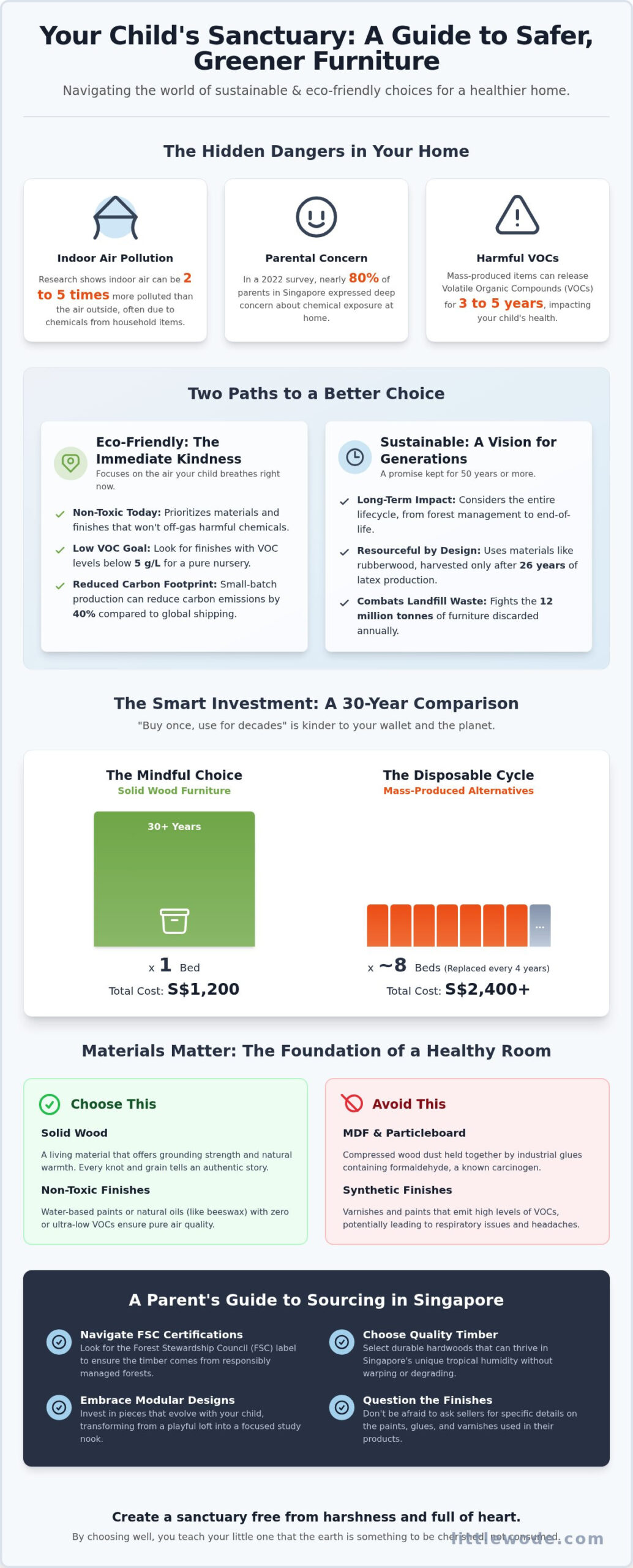
What if the very sanctuary you built for your child’s rest is quietly exhaling chemicals while they sleep? In a 2022 survey, nearly 80% of parents in Singapore expressed deep concern about indoor air quality and chemical exposure at home. It’s a valid worry. Research shows that indoor air can be two to five times more polluted than the air outside; this is often due to the volatile organic compounds found in mass-produced items. You want a home that feels like a warm embrace, not a source of hidden toxins. Choosing Sustainable & Eco-Friendly pieces is about more than just a label. It’s about protecting those tiny lungs and finding peace in the objects we bring into our homes.
You deserve to feel confident that your child’s bed or desk is as kind to the earth as it is to their health. This guide helps you see past the confusion of greenwashing to find furniture that truly honors nature. We’ll explore how to invest in slow-made pieces that grow alongside your little one, ensuring their room remains a safe, chemical-free haven for years. You’ll learn to identify ethical craftsmanship and choose materials that bring the quiet wisdom of the woods into your Singapore home.
Key Takeaways
- Understand the gentle difference between immediate choices and the lifelong promise of Sustainable & Eco-Friendly living to create an intentional, slow home.
- Discover why solid wood acts as a grounding plant ally and how to protect your child from hidden toxins like formaldehyde often found in mass-produced pieces.
- Explore the “buy once, use for a decade” philosophy through modular designs that evolve from playful lofts into focused study nooks as your family grows.
- Master the art of sourcing ethical furniture in Singapore by navigating FSC certifications and choosing quality timber that thrives in our unique tropical humidity.
- Find inspiration in simple, enduring designs that turn everyday rest into a mindful ritual, nurturing a sanctuary free from harshness and full of heart.
Understanding Sustainable & Eco-Friendly Living in Your Child’s Sanctuary
Within the four walls of a nursery, every choice carries a quiet weight. We often use the terms Sustainable & Eco-Friendly as if they’re the same; yet, they sing different songs to the earth. Choosing a crib or a wardrobe isn’t just about decor. It’s a ritual of care. While eco-friendly choices focus on the safety of the present moment, sustainability is a promise kept for 50 years or more. It’s the difference between a product that doesn’t hurt the planet today and one that heals it for tomorrow.
Creating a slow home means stepping away from the 12 million tonnes of furniture that end up in landfills annually. In Singapore, where space is a precious gift, filling a room with intentional pieces brings a sense of groundedness. These aren’t just objects; they’re companions. Natural materials like solid oak or hand-woven rattan offer a sensory landscape for a growing child. The grain of the wood under a tiny palm or the scent of beeswax polish nourishes a developing mind far better than the cold, sterile touch of plastic. By choosing well, you teach your little one that the earth is something to be cherished, not consumed.
The principles of Sustainable furniture design suggest that 80% of a product’s environmental impact is determined during the initial drawing phase. This means the story of your child’s bed began long before it reached your home. It started in a managed forest and a workshop where artisans value quality over speed. When we bring these pieces into our homes, we invite a spirit of environmental stewardship into the heart of our family life.
Eco-Friendly: The Immediate Kindness to Earth
Eco-friendly living focuses on the air your child breathes right now. Many mass-produced items emit Volatile Organic Compounds (VOCs) for 3 to 5 years after purchase. To keep your nursery pure, look for finishes with VOC levels below 5 grams per litre. Small-batch production is a gentle alternative to factory lines. It reduces carbon emissions by 40% compared to global shipping routes. These pieces use earth-derived components that won’t off-gas, ensuring your baby’s sanctuary remains a place of true restoration.
Sustainability: A Vision for the Generations to Come
Sustainability looks at the whole circle of life. It balances social health with the earth’s needs. In our region, rubberwood is a beautiful example of this balance. These trees are harvested only after 26 years of latex production, ensuring no part of the plant is wasted. Investing S$1,200 in a solid wood bed that lasts three decades is more mindful than spending S$300 every four years on disposable alternatives. It’s a commitment to a future world where forests still thrive and the air remains sweet for your child’s own children.
The Essence of Materials: Why Solid Wood and Non-Toxic Finishes Matter
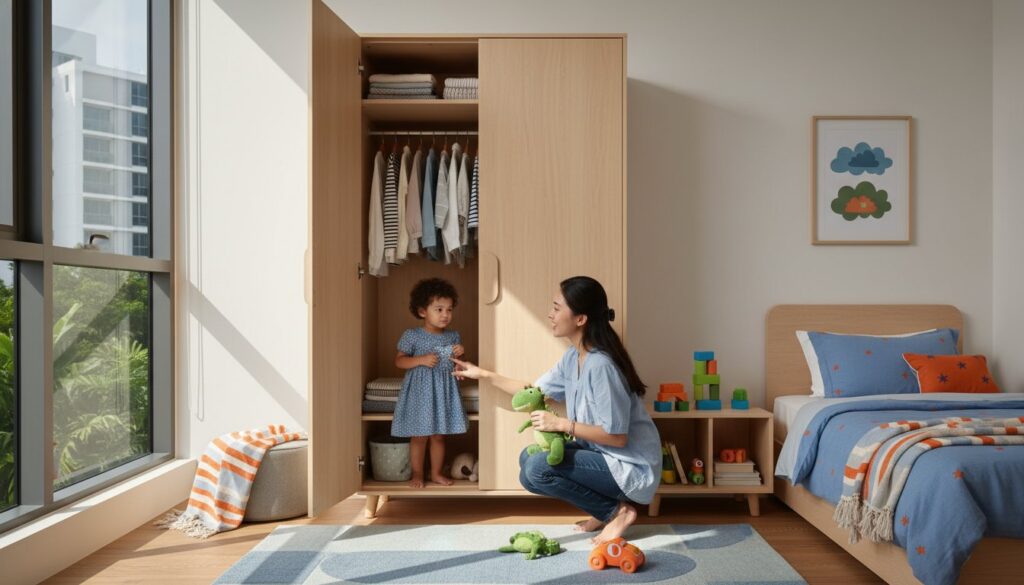
Choosing a bed or a desk for your child is a quiet act of love. It’s about more than just a place to sleep; it’s about the air they breathe and the surfaces they touch as they grow. Solid wood acts as a true plant ally, offering a grounding strength and a natural warmth that synthetic materials simply cannot replicate. While a mass-produced dresser might look uniform, it often hides a cocktail of industrial glues and heavy metals. These hidden toxins can linger in a child’s sanctuary for years, quietly affecting their well-being. Volatile Organic Compounds (VOCs) are invisible gases emitted by synthetic finishes that can affect indoor air quality. Understanding the health risks of VOCs is the first step in creating a space that truly nourishes.
Every knot and swirl in the wood grain tells a story of a life lived in the wild. These small imperfections aren’t flaws; they’re signatures of an authentic, slow life. Choosing furniture that celebrates these natural details teaches children to appreciate the world as it is, rather than demanding a sterilized, plastic perfection. By investing in Sustainable & Eco-Friendly pieces, you’re choosing a legacy of quality that grows more beautiful with age. These pieces don’t just fill a room; they anchor it with the wisdom of the earth.
The Nurturing Power of Solid Wood
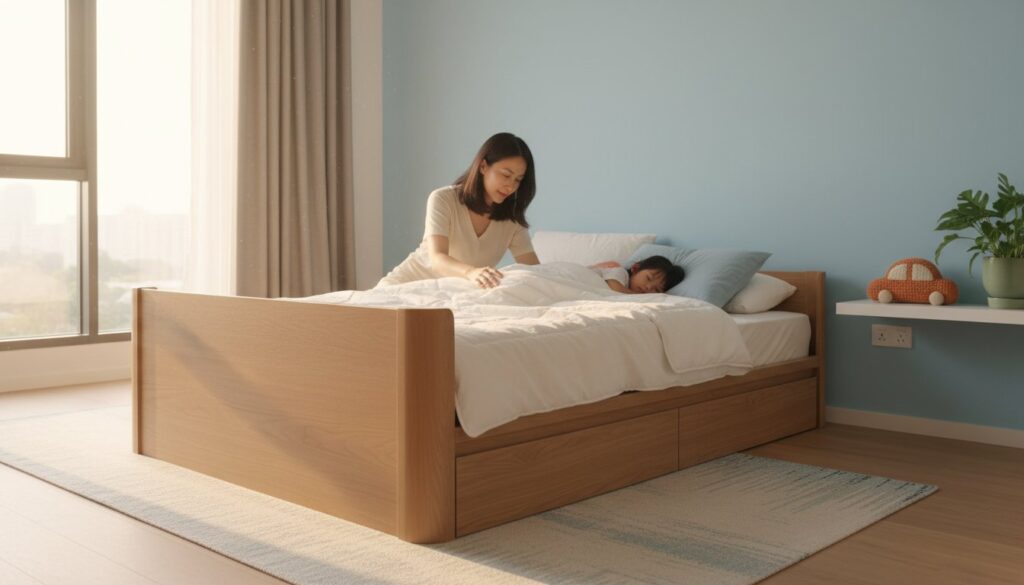
Solid wood is a living material that brings the essence of the meadow into your home. Unlike MDF or particleboard, which are often made of compressed sawdust and chemical resins, solid timber is durable and breathes with the seasons. In Singapore’s high humidity, which often stays above 80 percent, cheap composite furniture can swell and crumble within 24 months. Solid wood remains steadfast and strong. It naturally regulates the atmosphere, helping to soothe the room’s energy. The tactile experience is equally vital; children benefit from touching natural, textured surfaces that stimulate their senses without the cold, clinical feel of laminate. You might consider how solid timber beds provide a sturdy foundation for restful, deep sleep.
Choosing Gentle, Non-Toxic Finishes
The finish on a piece of furniture is the final layer of protection for your little one. We prefer water-based paints and botanical oils over harsh, solvent-based lacquers. These gentler choices ensure that the air remains pure and easy for sensitive lungs to breathe. You can often identify safer furniture through a simple sniff test; a strong, sharp chemical odor usually indicates high levels of off-gassing. Making the Sustainable & Eco-Friendly choice means opting for finishes that respect the planet and your child’s health. Maintenance becomes a simple, grounding ritual when you care for these natural finishes with gentle, plant-based cleaners and a soft cloth. This approach keeps the wood healthy and your home free from unnecessary chemicals.
- Water-based paints: These emit significantly fewer odors and dry without releasing harmful fumes into the nursery.
- Natural oils: These soak into the grain to nourish the wood from within, rather than sitting on top as a plastic film.
- Formaldehyde-free: Choosing solid wood eliminates the urea-formaldehyde glues typically found in S$200 flat-pack alternatives.
Modularity: The Sustainable Choice That Grows With Your Family
Choosing furniture for a child’s room is a quiet act of love for both the child and the earth. It represents a shift from the temporary to the enduring. The philosophy of “buy once, use for a decade” sits at the heart of a mindful home. By selecting pieces that adapt, we reduce the heavy burden of waste that often follows the fleeting years of childhood. Traditional “fast furniture” often ends up in landfills after just three or four years of use; however, modular design offers a different path. It invites a slower pace of consumption where one piece of furniture serves many purposes over time.
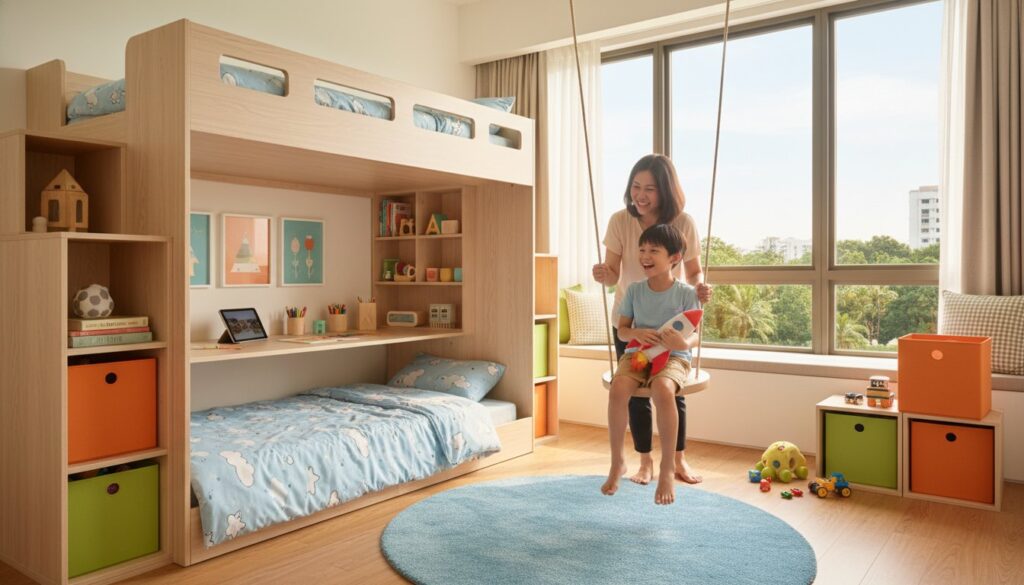
A Sustainable & Eco-Friendly home honors the natural rhythm of growth. When you invest in a piece like the New England Modular Loft Bed, you aren’t just buying a place to sleep. You’re creating a space that breathes and changes. In the early years, the area beneath the bed is a soft sanctuary for imaginative play. As your child grows into their school years, this same footprint transforms into a quiet study nook for focused learning. This evolution saves you the cost and environmental impact of replacing entire room sets every few seasons. Following EPA’s sustainable furniture guidelines helps us identify pieces that truly respect the air we breathe and the world we leave behind.
The beauty of these enduring pieces lies in their quiet strength. They withstand the energy of a toddler and the changing tastes of a teenager. Instead of discarding a bed because it no longer fits a “theme,” modular systems allow for simple adjustments. This approach nurtures a sense of stability. It teaches children that quality matters more than novelty. In our compact Singapore homes, this intentionality is essential for maintaining a sense of calm and space.
The Wisdom of Adaptable Beds
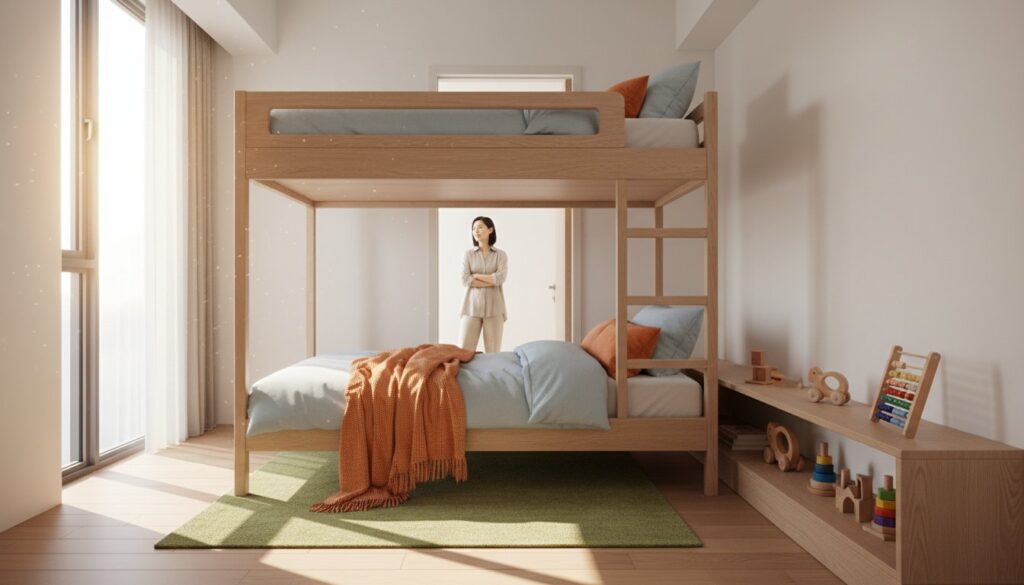
In Singapore’s cozy urban spaces, every square meter is a gift to be used wisely. Loft beds are space-saving miracles that lift the sleeping area to reveal new possibilities below. For families with more than one child, the New England Modular Triple Bunk provides a graceful solution that keeps everyone close while respecting personal boundaries. These bunk beds are designed with foresight. They can separate into independent single frames when siblings eventually move into their own rooms. This flexibility ensures that your initial investment continues to serve your family, regardless of how your living arrangements change over ten or fifteen years.
Storage That Simplifies Life
A peaceful room is one free from the noise of clutter. Modular storage creates a gentle environment where everything has its own home. This organization encourages a daily ritual of independent tidying, helping children feel grounded in their surroundings. The Tatum Single Storage Bed is a wonderful example of Sustainable & Eco-Friendly utility. It keeps treasures tucked away and out of sight, maintaining the room’s serene atmosphere. By selecting timeless designs with clean lines and natural finishes, you ensure the furniture remains relevant. Whether your child is five or fifteen, these pieces provide a neutral, soothing backdrop for their evolving personality and style.
A Parent’s Guide to Sourcing Ethical Furniture in Singapore
Choosing a piece of furniture for your child’s sanctuary is a quiet act of love. In our bustling city, finding Sustainable & Eco-Friendly pieces requires a discerning eye and a patient heart. You’ll want to look for the FSC (Forest Stewardship Council) mark on every crib or dresser you consider. FSC-certified wood ensures the timber was harvested from forests that are responsibly managed for long-term health, protecting the earth for the very children who will sleep in these beds. This certification isn’t just a label; it’s a promise that the forest will remain a wild, thriving place for generations to come. When you bring these pieces into your home, you’re bringing in the quiet strength of a tree that was grown with intention.
The Singapore Climate Challenge
Our island’s air is thick with life and moisture. Average humidity levels in Singapore often hover around 84%, a factor that tests the integrity of every joint and finish. Cheap veneers often peel or swell within 24 months because they rely on synthetic glues that fail in tropical heat. Solid wood acts differently. It breathes and moves with the seasons. To keep your wooden treasures healthy, allow air to circulate freely around them. Placing a bed just 5cm away from the wall prevents moisture traps and helps avoid mold growth. In an air-conditioned room, wood can dry out too quickly; choosing pieces finished with natural botanical oils helps the timber retain its soul and flexibility. For families in 90-square-meter HDB flats, selecting modular, slim-profile pieces ensures the room remains a place of rest rather than a cluttered space.
Identifying Authentic Sustainable Brands
True sustainability isn’t a badge; it’s a journey. Ask retailers about their slow process. Where was the tree grown? Who sanded the edges to make them soft for small hands? A brand committed to the earth will know these stories by heart. Investigate the lifecycle of the product beyond the initial sale. A bed that lasts 15 years is far more Sustainable & Eco-Friendly than a green-washed piece that breaks after three. Visiting a local showroom allows you to touch the grain and smell the faint, clean scent of real timber. It turns a purchase into a ritual of selection rather than a chore of consumption. Local craftsmanship means if a joint creaks after five years, support is just a phone call away. This local connection ensures your furniture doesn’t become waste, but instead becomes an heirloom.
Embrace the beauty of slow, wild, simple living by choosing pieces that honor the earth. When we choose quality over quantity, we teach our children to value the plant allies that provide us with shelter and comfort. This mindful approach to furnishing a room creates a ripple of healing that starts at home and reaches the deepest forests. It’s about creating a space that feels as natural and safe as a meadow in the morning light.
To begin your journey toward a more natural home, discover our collection of mindfully crafted children’s furniture designed specifically for the Singaporean home.
Littlewode: Crafting a Slow, Simple, and Wild-At-Heart Sanctuary
We believe a child’s bedroom should be a soft place to land. It’s a sanctuary where the noise of the outside world fades away and the gentle rhythm of nature takes over. Our commitment starts with a simple promise: to create a world free from harshness, one bed at a time. We don’t just provide furniture; we invite the wild woods into your home through carefully selected botanical inspirations. By choosing materials that breathe, we ensure your child’s space remains a pure, nurturing environment.
The story of our Casey collection begins with the earth itself. It features simple lines and enduring strength, crafted from 100% solid timber rather than the composite boards found in 85% of mass-market alternatives. These pieces aren’t built for a fleeting season; they’re built for a childhood. The Casey bed stands as a pillar of reliability, offering a sturdy frame that supports your child from their first big-kid bed through their teenage years. It embodies our “slow, wild, simple” mantra by stripping away the unnecessary and focusing on the soul of the wood.
We curate pieces like the Madeline Single Day Bed to serve as more than just a place to sleep. It’s a vessel for rest and a ritual of self-care. In the soft light of a Singapore afternoon, it’s a cozy reading nook where stories come to life. By night, it becomes a safe harbor for deep, restorative sleep. Bringing this piece into your home is an invitation to slow down. It encourages children to develop their own rituals of winding down, teaching them that rest is a sacred act rather than a chore.
To soothe and restore, we look to our plant allies. Every grain in the wood and every curve in the design is a tribute to the botanical world. We want children to feel the grounding energy of the forest even in the heart of the city. This connection to nature isn’t just aesthetic; it’s a fundamental part of a healthy childhood. It fosters a sense of belonging to something larger and more enduring than the digital screens that often dominate modern life.
Restoring Calm Through Mindful Design
Our focus remains on understated elegance that provides a quiet backdrop for your child’s imagination. We value the artisan’s touch over mass-market speed because every hand-sanded edge tells a story of patience. The handmade process ensures that no two pieces are exactly alike, reflecting the unique spirit of every child. This mindful design creates space for daily rituals of dreaming and quiet play. By removing visual clutter and harsh chemicals, we allow the mind to settle. It’s about creating a room that feels like a long, slow exhale at the end of a busy day.
This principle of simple, versatile design can be seen in many forms of quality furniture. A well-crafted stool, for instance, can serve multiple functions in a child’s room over the years. For those interested in seeing examples of such design-led pieces, you can learn more.
Your Journey to a Sustainable Home
Littlewode supports your transition to a more mindful, eco-conscious lifestyle. Choosing Sustainable & Eco-Friendly furniture is a quiet act of care for the planet your children will inherit. The enduring quality of our beds stands as a testament to our ‘less is more’ philosophy. Since our founding, we’ve focused on pieces that grow with your family, effectively reducing household waste by 40% over a ten-year period compared to disposable furniture. We invite you to visit our Tagore Lane showroom to find your next plant ally. Here, you can touch the textures and feel the grounding energy of real timber. It’s the first step toward building a home that is as kind to the earth as it is to your family.
Nurturing a Space for Slow, Mindful Growth
Creating a sanctuary for your little one starts with a single, thoughtful choice. By prioritizing Sustainable & Eco-Friendly materials, you’re inviting the quiet strength of nature into your home. Our collections feature solid wood and non-toxic finishes that keep your child’s environment pure and safe. These aren’t temporary fixes for a growing family. Every modular piece is designed to adapt and endure for 10+ years, growing alongside your child from their first steps to their teenage dreams.
We’re rooted right here in Singapore, focusing on the specific needs of local living spaces. Our furniture reflects a commitment to ethical sourcing and a slower pace of life. It’s about more than just utility; it’s about the daily rituals that shape a childhood. When you choose pieces crafted with intention, you’re building a foundation of warmth and tranquility. You’re giving your child a space that feels like a gentle embrace at the end of every day.
This philosophy of creating a pure, nurturing sanctuary can extend beyond furniture to include what nourishes your child from within. As you build a foundation of wellness for your family, you might also want to explore Freshly Brewed Bird’s Nest, a traditional choice for holistic health.
Explore our collection of slow, wild, and simple kids’ furniture
Take a deep breath and trust your instincts as you curate this special world. Your child’s sanctuary is waiting to bloom.
Common Questions About Sustainable Kids’ Furniture
Is eco-friendly furniture more expensive than traditional options?
Sustainable & Eco-Friendly furniture often carries a higher initial price, typically ranging from S$900 to S$2,000 for a quality bed frame. While mass-produced alternatives might cost S$300, they rarely last beyond 4 years. Choosing solid timber is a slow, mindful investment that serves your family for 20 years. This durability reduces the need for frequent replacements, saving you money and protecting our earth from unnecessary landfill waste.
What does FSC-certified wood mean for my child’s bed?
FSC certification means the timber in your child’s bed comes from forests managed under strict environmental and social standards. The Forest Stewardship Council ensures that for every tree harvested, others are planted to take its place. This practice protects biodiversity and supports the local communities who care for the land. It’s a way to bring the wisdom of the wild woods into your home with a clear, peaceful conscience.
How do I know if a bed frame uses non-toxic paint?
You can identify non-toxic furniture by looking for specific safety labels like the EN71-3 or GREENGUARD Gold certifications. These rigorous tests ensure the finishes are free from heavy metals and 10,000 different chemicals. Many artisan makers use botanical oils or water-based stains to nourish the wood naturally. These gentle finishes don’t release harsh odors, making them a safer choice for the sensitive spaces where your little ones dream and grow.
Can sustainable furniture survive the humidity in Singapore?
Solid wood furniture thrives in Singapore’s 80% average humidity if it’s kiln-dried to a moisture level of 10%. This careful process ensures the timber remains stable and resists warping or cracking in our tropical heat. Choosing hardwoods like Oak or Teak provides a grounded, lasting foundation for your nursery. These natural plant allies are far more resilient than composite boards, which often swell and peel when exposed to damp air.
What are VOCs and why should I worry about them in a nursery?
VOCs, or Volatile Organic Compounds, are invisible gases released from synthetic glues and finishes found in many standard cribs. Indoor levels of these chemicals are often 2 to 5 times higher than outdoor levels, which is concerning because infants breathe more rapidly than adults. Choosing Sustainable & Eco-Friendly pieces helps you avoid these irritants. It creates a tranquil atmosphere where your baby can breathe deeply and wake up feeling truly restored.
How can modular furniture help reduce environmental waste?
Modular furniture reduces waste by adapting to your child’s changing needs, extending the life of a single piece by 12 years or more. A convertible crib that transforms into a toddler bed and later a study desk prevents three separate items from entering a landfill. This “less is more” approach encourages a slower pace of consumption. It’s a simple ritual of transformation that respects the earth’s resources while providing a constant, familiar comfort.
Are solid wood beds safer for children with allergies?
Solid wood beds are much safer for the 20% of Singaporean children who struggle with allergic rhinitis. Unlike upholstered frames that harbor dust mites and dander, smooth timber surfaces are easy to wipe clean. This simple ritual keeps the sleeping environment pure and breathable. Choosing natural finishes ensures your child’s sanctuary remains a place to soothe and nourish, free from the hidden triggers found in synthetic materials.
What is the difference between recycled and sustainable materials?
Recycled materials are repurposed from existing waste, like plastic bottles or reclaimed timber, while sustainable materials are virgin resources grown responsibly. Both paths honor the “slow, wild, simple” ethos by reducing our footprint on the planet. A bed might use recycled steel bolts alongside sustainably harvested pine. Using these materials shows a deep reverence for nature, ensuring we take only what we need while giving the earth plenty of space to heal.