

20 January, 2026 | Blog post written by RON NG
bedroom furniture
Bunk Beds for Kids: The Ultimate Safety Checklist for Parents
The squeals of delight, the secret forts, the shared whispers after lights-out-bunk beds for kids are the stuff of childhood dreams. But for parents in Singapore, where every square metre of space is precious, that dream can come with a whisper of worry. Is it sturdy enough? Is my child really old enough for the top bunk? How can I be absolutely sure they’re safe while they sleep and play?
At Little & Wood, we’re passionate about ‘Making Fun,’ and that mission begins with unwavering safety. We pour stunning craftsmanship into every design, but we know true peace of mind comes from confidence. That’s why we’ve created this ultimate safety checklist. Consider this your definitive guide, walking you through every critical checkpoint-from selecting a rock-solid, sustainably-made frame to establishing fun-but-firm house rules. You’ll gain a clear, actionable plan to transform their room into a secure haven of sweet dreams and happy memories, built with both joy and care.
Before You Buy: The Non-Negotiable Structural Safety Checklist
The magic of a bunk bed-a sleepover fort and a space-saver in one-begins with its design. The most critical safety features are not add-ons; they are integral to the bed’s craftsmanship. Before you fall in love with a style, use this checklist to vet any model you’re considering, whether online or in a Singapore showroom. Understanding these structural non-negotiables is the key to distinguishing a beautifully designed, high-quality bed from a high-risk one. Let’s focus on the three pillars of bunk bed safety: guardrails, ladder construction, and overall stability.
Guardrails: Your First Line of Defence
The top bunk is a cosy nest, and guardrails are what keep it safe and secure. They are your first and most important line of defence against nighttime tumbles. When inspecting a model, ensure it meets these criteria:
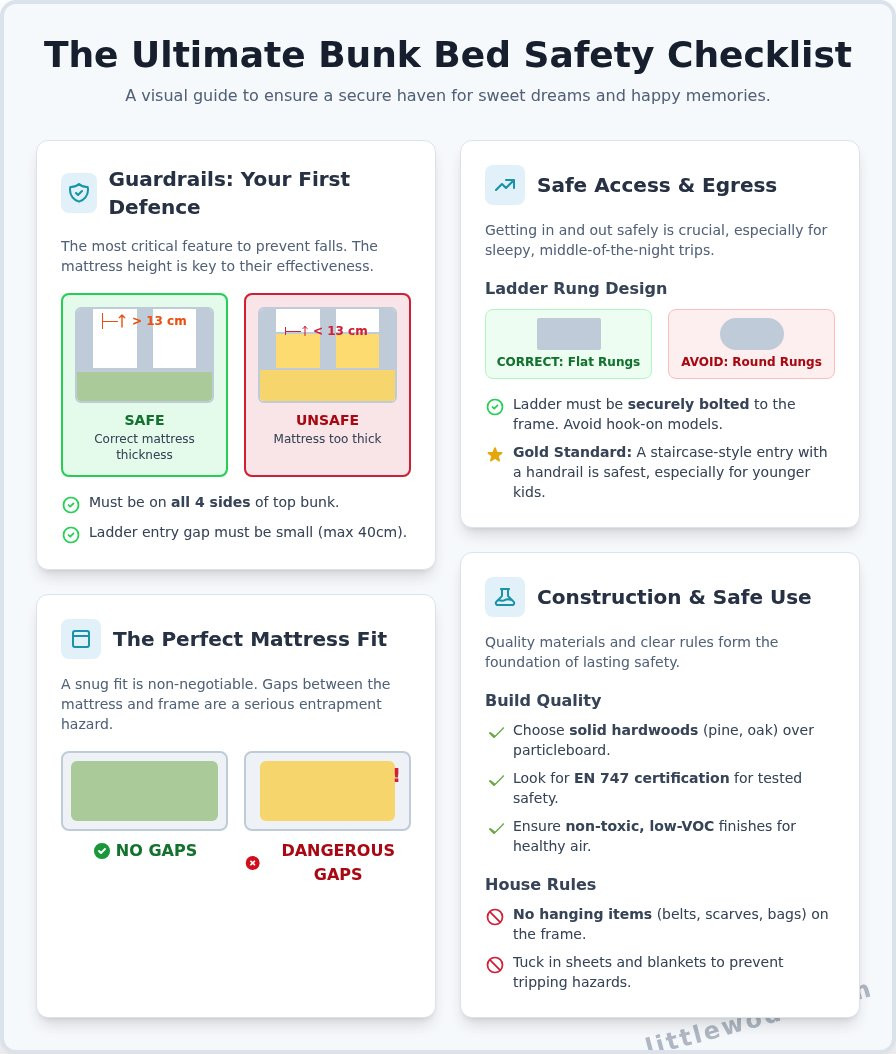
- Complete Coverage: The top bunk must have guardrails on all four sides, even the side against the wall.
- Defined Entryway: The gap for climbing the ladder should be small and well-defined, typically no more than 40 cm wide.
- Proper Height: Guardrails must extend at least 13 cm above the top surface of the mattress to be effective. Always use the mattress thickness recommended by the manufacturer.
- Climb-Proof Design: Look for vertical slats or solid panels. Horizontal slats can tempt little feet, turning the guardrail into a ladder itself.
Ladder and Staircase Design: Safe Ascents and Desents
Getting in and out of the top bunk should be an easy climb, not a risky mission. The design of the ladder or staircase plays a huge role in preventing slips and falls, especially during sleepy, middle-of-the-night trips.
- Secure Footing: Ladder rungs should be flat and wide, not round, providing a more stable surface for feet. Some premium designs even feature textured, non-slip surfaces.
- Sturdy Attachment: The ladder must be securely bolted to the bed frame. Avoid models where the ladder merely hooks on, as these can become dislodged.
- The Gold Standard: If space allows, a staircase-style entry with a proper handrail offers the ultimate in safety and ease of use for younger children.
Materials and Construction: The Foundation of Safety
A bed’s strength comes from the materials it’s made of and the quality of its construction. This is where stunning craftsmanship delivers true peace of mind. When choosing bunk beds for kids, look for a solid foundation built on quality and care. Ensure there are no sharp edges or pinch points anywhere on the frame. Solid hardwoods like pine, oak, or birch offer superior stability and durability compared to particleboard. Finally, look for proof of quality, such as certification to the European EN 747 standard. Reputable manufacturers are proud to meet these rigorous international Bunk Bed Safety Standards, which also cover the use of non-toxic, low-VOC finishes for healthy indoor air.
The Perfect Fit: Choosing a Safe Mattress and Bedding
Once you’ve chosen one of the fantastic bunk beds for kids on the market, the next step is just as crucial for safety: selecting the right mattress. This isn’t just about comfort; an incorrectly sized or overly thick mattress is a serious, yet often overlooked, hazard. It can create dangerous gaps or render safety guardrails ineffective. Let’s ensure your child’s bunk bed is a perfectly snug and secure haven for sleep and dreams.
Getting Mattress Size and Fit Exactly Right
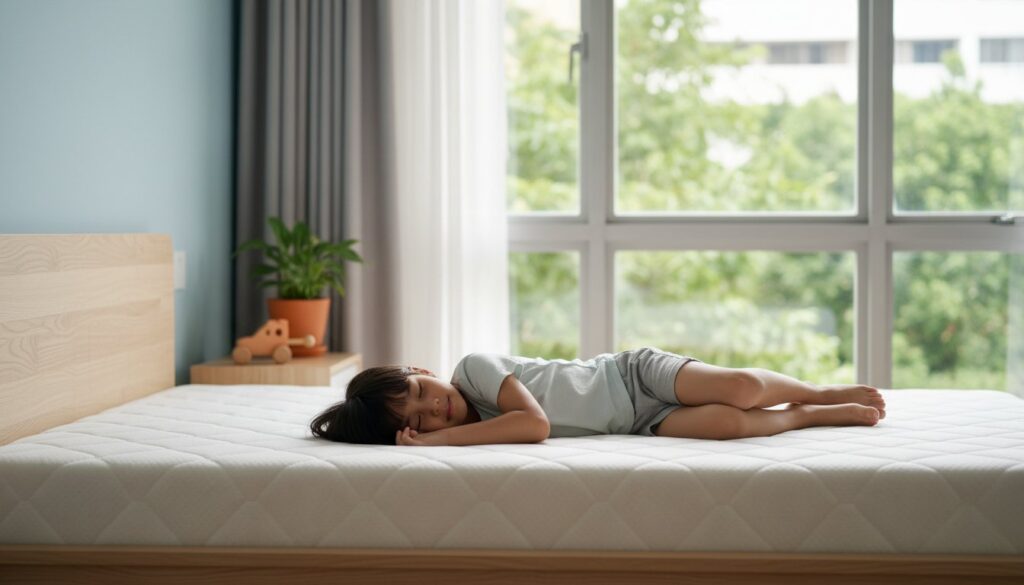
The golden rule for a bunk bed mattress is that it must be a perfect fit. Before you buy, take a moment to measure the interior dimensions of the bunk bed frame. There should be absolutely no gap between the mattress and the frame on all four sides. Even a small space can pose a serious entrapment risk for a small child. Always follow the bed manufacturer’s recommended mattress dimensions to the letter. We also advise choosing a firm mattress, which provides better support and is a safer foundation for sleeping children.
Mattress Height and Guardrail Safety
A mattress that is too thick is one of the most common safety mistakes parents make. Every bunk bed has a maximum recommended mattress thickness, which is designed to ensure the guardrails remain effective. A thick mattress reduces the height of the guardrail, turning a protective barrier into a low bump that a child could easily roll over. Falls are a leading cause of bunk bed-related accidents, as highlighted by Bunk Bed Injury Statistics, and a too-thick mattress dramatically increases this risk. Remember to factor in the height of any mattress toppers when calculating the total height.
Safe Bedding Practices for Bunk Beds
Your choice of bedding also contributes to a safe sleep environment. By following a few simple practices, you can add another layer of security:
- Avoid bulky bedding: An overly thick or fluffy duvet on the top bunk can compress against the guardrail, effectively creating a ramp for a child to roll over. Opt for lighter, well-fitting comforters.
- Tuck everything in: Ensure sheets and blankets are tucked in securely. Loose bedding can become an entanglement or tripping hazard, especially for a child climbing down the ladder in the middle of the night.
- Keep it clear: Never hang anything-including belts, scarves, bags, or decorations-from the bed frame or guardrails, as these pose a serious strangulation risk.
Getting the fit right is the foundation of bunk bed safety. To take the guesswork out of the equation, explore our range of perfectly-sized mattresses for kids’ beds, crafted for a flawless and safe fit.
Safe Setup: Correct Assembly and Room Placement
A beautifully crafted bunk bed is a centerpiece of childhood fun, but its magic truly shines when it’s also a fortress of safety. Even the most robustly designed bunk beds for kids can become a hazard if assembled incorrectly or placed in a risky spot. Think of this step as the final, crucial brushstroke in creating a secure and joyful sleep sanctuary. This section covers the essential best practices for assembly and strategic room placement, helping you build a safe zone around your child’s new favourite space.
The Assembly Process: DIY vs. Professional
The journey from flat-pack to dream bed starts with the instruction manual. Following the manufacturer’s guide to the letter is non-negotiable. Reputable makers design their beds to meet stringent safety protocols, often referencing standards like the federal safety requirements for bunk beds, and correct assembly is crucial to uphold that integrity. Double-check that every bolt, screw, and fastener is fully tightened. As part of your home’s rhythm, make it a habit to periodically re-tighten all hardware, as daily use can cause loosening over time. For complete peace of mind, consider professional assembly. Many furniture retailers in Singapore offer this service, often starting from S$80, ensuring every component is perfectly and securely fitted.
Strategic Room Placement for Maximum Safety
Where you place the bunk bed is just as important as how you build it. By thoughtfully positioning the bed, you can significantly reduce potential risks and create a cozy, protected environment. The goal is to establish a clear “safe zone” around the bed.
- Go for the Corner: Whenever possible, place the bunk bed in a corner against two walls. This provides extra structural support and closes off two sides, reducing the chance of falls from those angles.
- Mind the Overhead Hazards: Keep the bed well away from ceiling fans, dangling light fixtures, and windows. Ensure there are no curtain cords or blinds with long loops nearby, as these can pose a strangulation risk.
- Check for Clearance: There should be at least 60cm (about two feet) of space between the top bunk mattress and the ceiling. This gives your child enough room to sit up comfortably without bumping their head.
- Light the Way: Place a soft night light near the ladder. This small touch makes a world of difference for sleepy, middle-of-the-night trips, preventing stumbles and falls in the dark.
Establishing ‘Bunk Bed Rules’: A Safety Guide for Your Kids
Our stunning craftsmanship ensures your child’s bed is a fortress of safety, but the story doesn’t end there. True peace of mind comes from blending a secure structure with safe behaviour. Establishing clear household rules transforms your new furniture into a cherished and accident-free space. The best part? You can make it a fun family activity, creating a ‘Bunk Bed Charter’ together. When kids help create the rules, they are far more likely to embrace them.
The Golden Rules of the Top Bunk
The top bunk holds a special kind of magic, and with that comes a special responsibility. We call these the golden rules-simple, non-negotiable, and key to keeping the fun going. Frame them as the official rules for the ‘captain’ of the top bunk!
- One at a Time: The top bunk is a solo zone. Only one person is allowed up top at any time.
- No Jumping or Roughhousing: Bunk beds are for dreaming, not for acrobatics. Keep wrestling matches and pillow fights on the floor.
- Always Use the Ladder: Every trip up or down must be via the ladder, facing it as you climb. No jumping or creative dismounts!
- A Sleep-Only Space: Encourage your child to see the top bunk as a cosy nest for sleeping and quiet reading, not a play fort.
Age Appropriateness and General Safety Habits
Great safety habits extend beyond just the top bunk. Safety experts in Singapore and globally recommend that children under six years old should not use the top bunk, as they may not have the coordination needed for safe climbing. Beyond this crucial age guideline, teaching children to respect their space is vital for creating a secure environment for your beautifully designed bunk beds for kids.
Explain the ‘why’ behind each rule in a way they can understand. Instead of just “don’t leave toys on the floor,” try “let’s keep the floor clear so no one trips in the dark on the way to the bathroom.” This helps them see safety as a caring act, not just a command. A tidy sleep space is a safe sleep space, making sure their journey to dreamland is always a smooth one.
Long-Term Safety: Your Ongoing Maintenance Checklist
Bringing a bunk bed into your home is an exciting moment, but safety doesn’t end after assembly. Like any well-loved piece of furniture, your bunk bed will experience wear and tear from daily adventures, midnight climbs, and pillow forts. A little proactive care goes a long way in ensuring it remains a secure and joyful space for your children. Creating a simple, ongoing maintenance schedule is the best way to catch minor issues before they become major concerns, giving you complete peace of mind.
The 6-Month Bunk Bed Safety Check-up
Set a reminder on your calendar every six months to run through this quick and easy inspection. It only takes a few minutes and is crucial for the long-term stability of bunk beds for kids. Grab the Allen key that came with your bed and get started!
- Tighten Up: Methodically check and tighten every screw, bolt, and fastener. Pay special attention to the guardrails, ladder connections, and main frame joints, as these experience the most movement.
- Inspect the Frame: Run your hands and eyes over the entire frame, looking for any signs of stress, cracks in the wood, or bent metal components.
- Test the Ladder: Give the ladder a firm but gentle shake to ensure it is still securely attached to the frame and doesn’t wobble or shift.
- Check Mattress Supports: Lift the mattress and inspect the slats or support panel underneath. Look for any cracks, splits, or signs of bowing that could compromise its strength.
Recognizing When a Repair or Replacement is Needed
Sometimes, an issue requires more than just a quick tightening. You should address any significant wobbling or instability immediately, as this often points to a structural problem. Cracked wood and bent metal are serious red flags that compromise the bed’s integrity and mean it should not be used until fixed.
If you discover a broken or damaged part, don’t try to improvise a fix. Contact the manufacturer to order an official replacement part. Using incorrect hardware can create new safety hazards. While maintenance is key, starting with a foundation of superior quality makes all the difference. Our solid wood bunk beds are built with stunning craftsmanship and sustainably sourced materials, designed to last for generations of play.
Making Fun, Safely: Your Final Bunk Bed Checklist
Choosing the perfect bunk beds for kids is about creating a secure and joyful haven where dreams can soar. Your peace of mind begins with a solid foundation-verifying structural integrity before you buy and ensuring correct assembly-and continues with establishing clear family rules and performing regular maintenance. These simple steps transform a space-saving solution into a certified safe zone for play and rest.
At Little Wode, we believe safety and fun should always go hand-in-hand. That’s why our commitment to your family’s well-being is built into every piece we create. Each bed is crafted from sustainable, solid wood for maximum stability and finished with non-toxic, low-VOC paints and lacquers. Proudly designed to meet the stringent EN 747 European safety standards, our beds are the foundation for countless happy memories.
Discover our collection of irresistibly fun and safe bunk beds and give your children a space that’s as magical as it is secure. Happy adventures await!
Bunk Bed Safety: Your Questions Answered
What is the recommended age for a child to use the top bunk?
For little adventurers ready for new heights, safety is paramount. The general safety guideline is that children should be at least six years old before sleeping on the top bunk. By this age, they typically have the coordination, balance, and awareness needed to navigate the ladder safely, even when sleepy. This recommendation helps prevent accidental falls and ensures the bunk bed remains a cosy, secure space for dreaming, not a playground for tumbles.
Are wooden or metal bunk beds safer for kids?
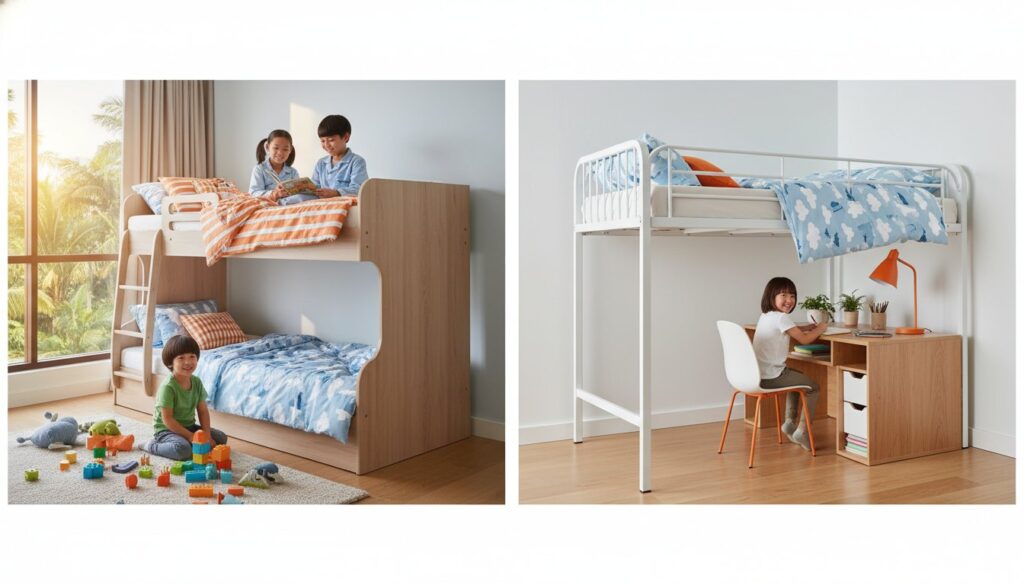
The safety of a bunk bed lies in its stunning craftsmanship, not just its material. Both beautifully crafted wooden bunk beds and sturdily engineered metal ones can be exceptionally safe. Look for solid construction, smooth edges, and a wobble-free frame. High-quality wooden beds offer natural sturdiness and warmth, while well-made metal frames provide sleek durability. Ultimately, choosing a bed that meets stringent international safety standards is far more important than the material it’s made from.
How much space should be between the top bunk and the ceiling?
To ensure every morning starts without a bump, it’s crucial to leave adequate headroom. We recommend at least 75cm of space between the top bunk mattress and the ceiling. This provides enough room for your child to sit up comfortably without hitting their head and, importantly, discourages any attempts at jumping. This simple measurement is a key part of creating a safe and comfortable sleep sanctuary for your little one, making their room irresistibly fun and secure.
Can most bunk beds be separated into two individual twin beds?
Absolutely! Many modern bunk beds for kids are designed with growing families in mind and can be cleverly separated into two matching twin beds. This feature, often called “convertible” or “detachable,” offers incredible long-term value and flexibility. As your children grow and desire their own space, you can easily adapt their room. Always check the product description to confirm this feature before purchasing, ensuring your investment serves your family for years to come.
What safety certifications should I look for when buying a bunk bed in Singapore?
Your peace of mind is our top priority. While Singapore does not have its own unique mandatory standard for bunk beds, reputable retailers adhere to globally recognised safety certifications. Look for bunk beds that comply with the European standard (EN 747) or the American standard (ASTM F1427). These stringent standards cover guardrail height, ladder construction, and overall structural integrity. Checking for these certifications ensures the bed has been rigorously tested for safety, making it a reliable choice for your home.
How do I make a bunk bed ladder safer for my child?
Making the climb to dreamland both fun and secure is simple with a few thoughtful touches. First, ensure the ladder is firmly bolted to the bed frame-no wiggles allowed! For extra grip, you can apply non-slip adhesive treads to each step. A small, battery-operated touch light or a nightlight near the base of the ladder can also make those nighttime journeys much safer. Finally, teach your child to always face the ladder and use both hands when climbing.