

7 April, 2026 | Blog post written by RON NG
children's furniture
Designing a Dream Kids’ Room: A Practical Guide for Singapore Parents
Staring at the four walls of your child’s room, feeling more overwhelmed than inspired? In a Singapore HDB or condo where every square foot is precious, planning the perfect kids room can feel like a huge challenge. You want to create a magical space, but you’re juggling concerns about limited room, choosing furniture that lasts beyond the toddler years, and ensuring everything is safe and non-toxic. The sheer number of themes and layout options can be enough to make any parent feel stuck before they even begin.
Take a deep breath-you’ve come to the right place. This practical guide is designed to turn that stress into confidence. We’ll walk you step-by-step through creating a beautiful, functional, and fun space that grows with your child. From clever space-saving hacks perfect for compact homes to selecting durable, future-proof furniture your child will love, we’ll empower you to make smart decisions and build a cherished sanctuary that works for your family for years to come.
Step 1: Planning Your Child’s Room for Today and Tomorrow
The journey to creating the perfect kids room begins not with a specific theme, but with a practical vision. Before you commit to a superhero city or a princess castle, think about functionality first. In Singapore’s HDB flats and condos where space is a premium, every decision counts. The most successful designs are born from collaboration, so involve your child in the planning. This fosters a sense of ownership and makes the process exciting for them. Start by accurately measuring your space, noting the positions of windows, doors, and power outlets to ensure your plans are grounded in reality.
Creating a Mood Board and Floor Plan
Visualisation is key to a cohesive design. Use free tools like Pinterest or Canva to create a mood board, gathering images of colours, furniture, and textures that you and your child love. Next, sketch a simple floor plan. This doesn’t need to be architectural-grade; a basic drawing helps you see how key pieces like the bed and wardrobe will fit, ensuring there’s still ample room for play and movement.
Designing a Room That Grows With Your Child
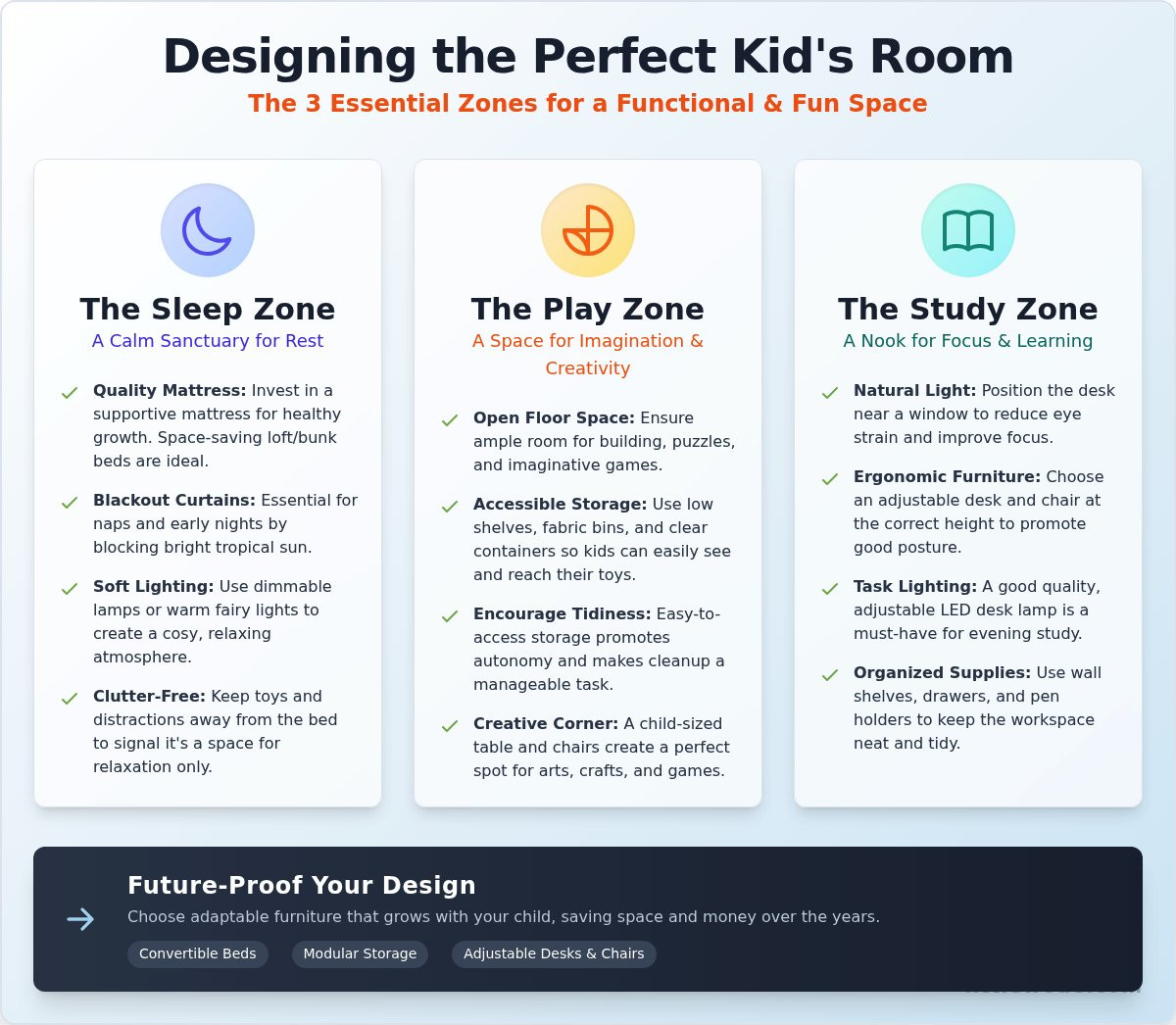
Children evolve quickly, and their room should too. The secret is ‘future-proofing’. Instead of bold, theme-specific colours, opt for a neutral palette for walls and large furniture. This creates a timeless canvas that can be updated easily. To truly design a space that supports the various stages of child development, invest in adaptable furniture. Think about:
- Convertible beds: A cot that transforms into a toddler bed, then a daybed.
- Modular storage: Shelving units that can be stacked or reconfigured as needs change.
- Adjustable desks and chairs: Furniture that grows with them from preschool crafts to PSLE prep.
This approach allows you to inject personality with less permanent, more affordable items like bedding, rugs, and wall art. The function of the room will shift from a play-centric zone to a hub for study and socialising, and this forward-thinking plan ensures the space remains relevant without requiring a complete overhaul every few years.
Step 2: The Three Essential Zones for a Functional Kids’ Room
A successful kids room is more than just a place to sleep; it’s a multi-functional space that adapts to your child’s changing needs. By dividing the room into three distinct zones-Sleep, Play, and Study-you create an organised environment that minimises clutter and simplifies routines. This clear structure helps children understand where different activities happen, making cleanup more intuitive and encouraging independence. You can define these zones visually using area rugs, different wall colours, or clever furniture placement.
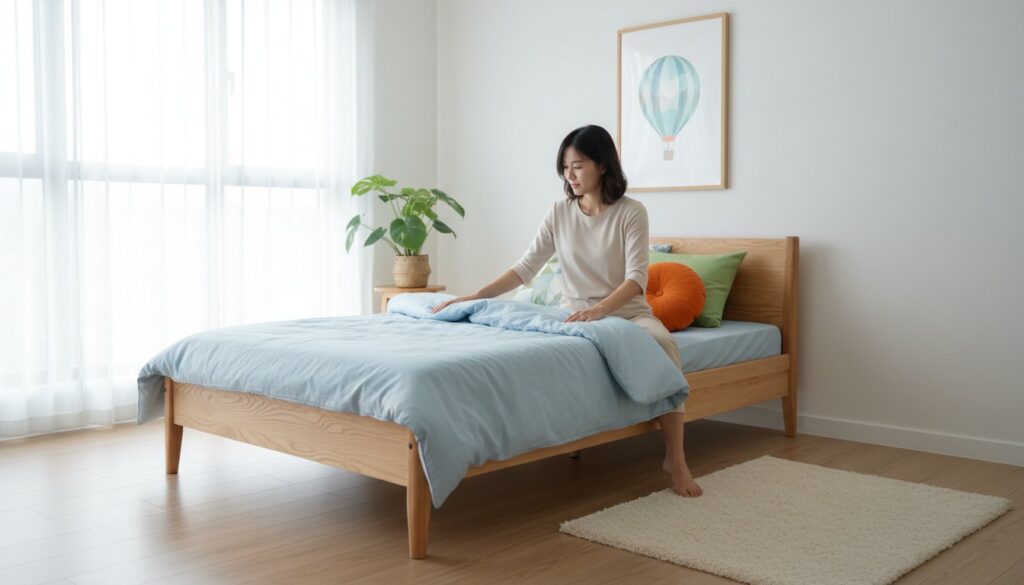
The Sleep Zone: A Calm Sanctuary
This area should be a peaceful retreat dedicated solely to rest. In Singapore’s compact homes, space-saving beds like loft or bunk beds are excellent choices. However, the most critical investment is a quality mattress that supports healthy growth. Create a serene atmosphere with:
- Blackout curtains: Essential for blocking out the bright tropical sun for naps and early nights.
- Soft lighting: A dimmable lamp or warm fairy lights create a cosy mood for bedtime stories.
- Clutter-free surfaces: Keep toys and distractions away from the bed to signal that this space is for relaxation only.
The Play Zone: A Space for Imagination
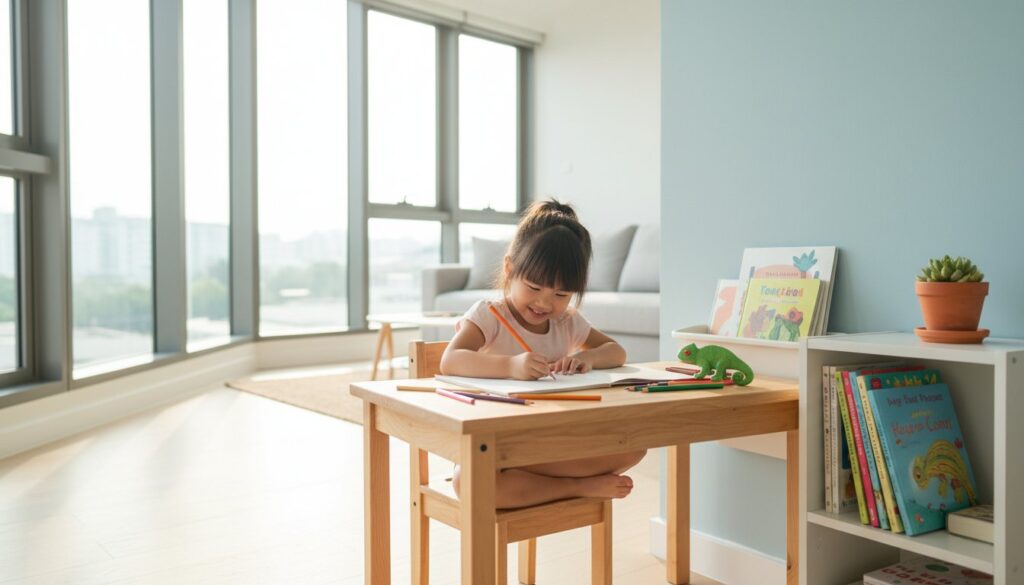
Carve out a dedicated area for fun, creativity, and exploration. Ensure there is open floor space for building blocks, puzzles, or imaginative play. Smart storage is key here; use low, open shelves, fabric bins, and clear containers so your child can see and access their toys easily. Accessible storage not only makes tidying up a manageable task for your child but also supports positive developmental outcomes by giving them autonomy over their playthings. A small, child-sized table and chairs create the perfect spot for arts, crafts, and board games.
The Study Zone: A Nook for Focus
As your child starts school, a dedicated study zone becomes crucial. This space should be quiet and conducive to learning. Position the desk near a window to take advantage of natural light, which helps reduce eye strain. Choose an ergonomic chair and a desk at the correct height to promote good posture during homework sessions. Good task lighting, like an adjustable LED desk lamp, is a non-negotiable for evening study. Keep the area organised with wall shelves, pen holders, and drawers to ensure school supplies are always within reach but off the main workspace.
Step 3: Choosing Safe, Durable, and Stylish Furniture
Furniture forms the foundation of any functional and inviting kids room. For Singapore parents, especially those designing for HDB or condo spaces, the challenge is to find pieces that are safe, space-efficient, and built to last through years of play and growth. Prioritise sturdy construction, rounded corners, and materials that can withstand the rigours of childhood.
Essential Furniture Checklist for a Kid’s Room
Start with the non-negotiables before adding decorative extras. A well-planned room layout ensures there’s ample space for both rest and play.
- The Bed: As the room’s centerpiece, invest in a high-quality bed frame. Consider options like loft beds to maximise floor space or extendable beds that grow with your child.
- Storage Solutions: A combination of a wardrobe for clothes, a chest of drawers, and open bookshelves helps keep clutter organised and essentials within reach.
- A Dedicated Study Area: A properly sized desk and an ergonomic chair create a comfortable spot for homework and creative projects, fostering good habits from a young age.
- Optional Comforts: If space permits, a small bedside table, a play table, or a comfy beanbag can add extra functionality and personality to the room.
Why Quality Materials Matter
Investing in quality furniture is a smart financial decision. Solid wood pieces, while having a higher initial cost than MDF or particleboard, offer superior durability and longevity, often lasting well into the teen years. Furthermore, always look for non-toxic, low-VOC (Volatile Organic Compounds) finishes to ensure a healthier indoor environment for your child. Modular furniture that can be adapted over time is another excellent way to save money in the long run. Discover our range of sustainably made kids’ furniture that combines timeless design with lasting quality.
Safety Standards to Look For in Singapore
Your child’s safety is the top priority. When shopping for furniture for your kids room, perform these simple checks to ensure peace of mind:
- Anchor It: Always anchor tall or heavy furniture like wardrobes and bookshelves securely to the wall to prevent tipping accidents.
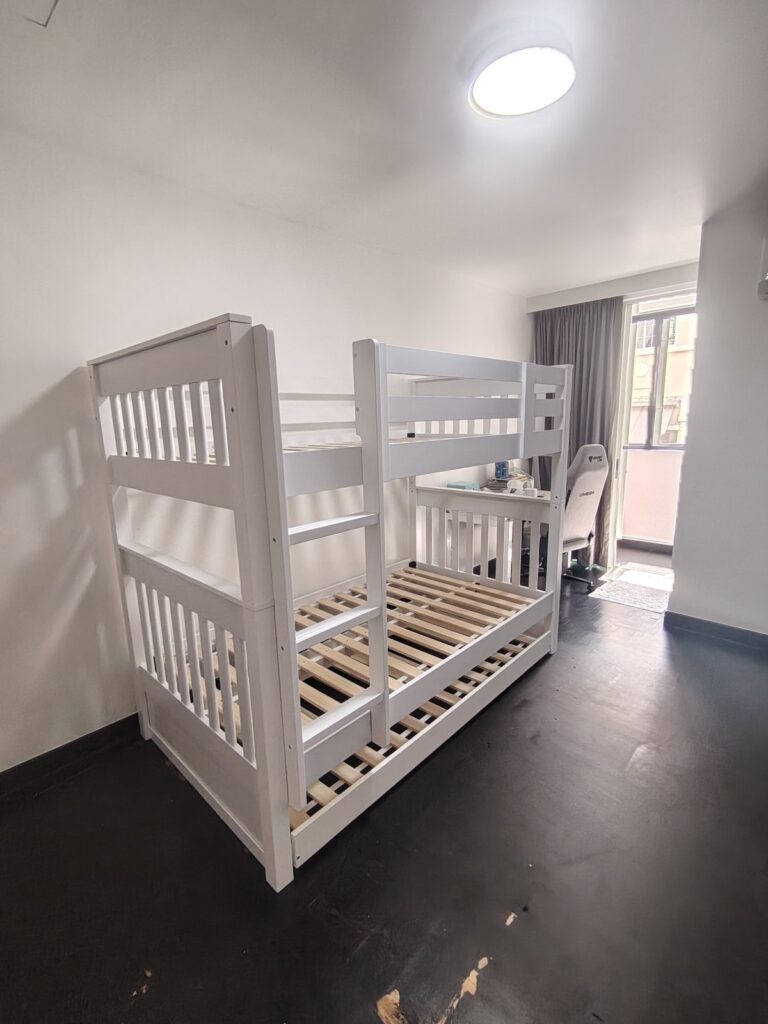
- Bunk Bed Safety: Ensure bunk beds have sturdy guardrails on all sides of the top bunk and meet international safety standards.
- Check for Hazards: Look for rounded corners and smooth edges. Check that drawers have safety stoppers to prevent them from being pulled out completely and avoid designs with potential pinch points.
Step 4: Smart Solutions for Small Singaporean Bedrooms
In Singapore, where space in HDB flats and condos is a premium, designing a functional kids room requires smart thinking. The key is to make every square metre count. Beyond just choosing furniture, using light paint colours and strategically placed mirrors can create an illusion of a larger, brighter space, instantly making the room feel more open and airy.
Go Vertical with Multi-Functional Furniture
When floor space is limited, the only way to go is up! Multi-functional furniture is a parent’s best ally in maximising a compact room. Instead of separate pieces for sleeping, studying, and storing, look for integrated solutions that serve multiple purposes and grow with your child.
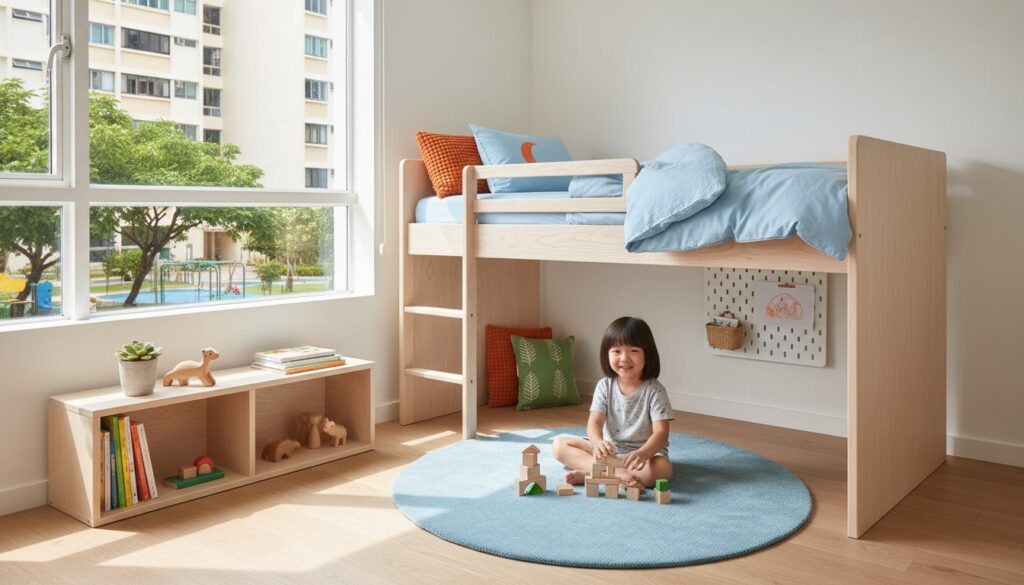
- Loft and Bunk Beds: These are game-changers, freeing up valuable floor area for a play mat or reading nook. A loft bed with a desk and shelving underneath creates a dedicated sleep-and-study zone in a single footprint.
- Storage Beds: Opt for beds with built-in drawers underneath to discreetly store bedding, clothes, or toys. A trundle bed is another excellent option, providing an extra spot for sleepovers without taking up permanent space.
- Wall-Mounted Shelving: Ditch bulky, floor-standing bookcases. Wall-mounted shelves keep books and treasures organised while keeping the floor clear, which visually expands the room.
Mastering Storage and Organisation
A tidy room always feels bigger. With toys, books, and clothes, clutter can quickly take over a small kids room. Implementing clever storage hacks makes it easier for both you and your child to keep things organised and accessible.
- Use rolling under-bed boxes for items that aren’t needed daily, like seasonal clothing or larger toy sets.
- Install a row of hooks on the back of the door or on a clear wall space for school bags, jackets, and hats.
- Choose clear, stackable bins for toys. This helps your child see what’s inside without needing to empty every single box to find their favourite figurine.
- Embrace the “one in, one out” rule. Regularly declutter and consider rotating toys every few months to keep the space fresh and prevent it from becoming overwhelmed.
By combining these vertical, multi-functional, and organisational strategies, you can create a comfortable and spacious-feeling bedroom, no matter the size. For more inspiration, explore our collection of space-saving kids’ furniture.
Step 5: Decor and Themes to Spark Joy and Creativity
The final touches are what transform a functional space into a magical kids room that your child will adore. This is where you can inject personality and fun, creating an environment that supports both play and rest. The key is to build a flexible design that can evolve with your child’s ever-changing interests.
Choosing a Colour Palette
Colour has a profound impact on mood. For sleeping areas, consider calming shades of soft blue, gentle green, or warm grey to promote relaxation. In contrast, a play or study nook can benefit from a splash of energetic yellow or orange to stimulate creativity. A practical approach for Singapore homes is to paint walls a versatile neutral colour and introduce vibrant hues through accessories, bedding, and storage boxes. For a bigger impact, a feature wall with removable wallpaper or a painted mural can define the room’s character without overwhelming the space.
Incorporating Themes without Overdoing It
While your child might be obsessed with dinosaurs today, it could be astronauts next year. Instead of investing in expensive, theme-specific furniture, build the theme with adaptable decor elements. This strategy is both budget-friendly and easy to update.
- Use textiles: Introduce themes with duvet covers, cushions, and floor rugs.
- Wall decor: Art prints, posters, and removable wall decals are perfect for adding character.
- Smart furniture choices: Opt for classic, neutral furniture that can anchor any theme. For durable pieces that grow with your child, you can explore timeless collections online.
This approach allows the core of the kids room to remain timeless, while the decorative layer can be swapped out as your little one discovers new passions, from jungle safaris to fairy-tale castles.
Adding Personal and Fun Touches
Make the room uniquely theirs by incorporating elements that reflect their personality. Create a gallery wall to proudly display their latest masterpieces from school. Add a touch of whimsy with star-shaped fairy lights or a fun animal-themed night light for comfort. A cosy corner with a soft rug, a beanbag, or a small teepee can become their favourite spot for reading and quiet time. Finally, empower your child by letting them choose a few final decor items themselves-it gives them a sense of ownership and pride in their special space.
Your Blueprint for the Perfect Kids’ Room in Singapore
Designing your child’s bedroom is a journey of love, creating a nurturing space that supports their growth. By planning for the future and organising the room into distinct zones for sleep, play, and study, you lay the foundation for a sanctuary they’ll cherish for years. Especially in compact Singaporean homes, choosing smart, adaptable furniture is the key to creating a functional and joyful kids room that sparks creativity at every turn.
The right furniture makes all the difference, providing a safe and inspiring backdrop for childhood. Ready to build their dream space? Explore our collection of high-quality kids’ furniture. At Little Wode, we offer one of Singapore’s largest selections of kids’ beds, all crafted from sustainable, solid wood. Our clever modular designs grow with your child, making them a wise investment for every stage of their journey. Here’s to creating a magical space where your little one can dream big!
Frequently Asked Questions
How do I design a room that two kids can share?
To design a shared room, focus on creating distinct personal zones. Use bunk beds or loft beds to maximise floor space, a common challenge in Singaporean homes. Assign each child their own colour scheme or decor theme for their side of the room. Smart storage is key; utilise vertical shelving and under-bed drawers to keep clutter organised and give each child their own space for toys and belongings, fostering harmony and a sense of ownership.
What is the best colour for a kid’s bedroom?
There is no single “best” colour, as it depends on the desired mood. Soft blues, gentle greens, and warm neutrals create a calming atmosphere conducive to sleep. For a more energetic feel, use vibrant colours like yellow or coral as an accent on one wall or through decor items like cushions and rugs. Involving your child in choosing the colour can be fun, but guide them towards versatile shades that can adapt as they grow and their tastes change.
How can I make my kid’s room look good on a budget?
A stylish room doesn’t require a large budget. Consider DIY projects like painting a mural or framing your child’s artwork. For affordable furniture, explore IKEA or hunt for pre-loved gems on platforms like Carousell. A fresh coat of paint and new bedding can dramatically transform the space for under S$300. Focus on multi-functional pieces, like a bed with built-in storage, to save both money and precious floor space in your home.
At what age should a child get their own room?
There’s no magic age, as it often depends on family needs and space constraints, especially in Singapore’s HDB flats and condos. Many parents consider the transition when a child starts primary school, around age six or seven, to provide a quiet space for homework. Another factor is sleep; if siblings have different sleep schedules or one consistently wakes the other, it might be time for separate rooms if your home allows for it.
How do I transition a kid’s room from a nursery to a ‘big kid’ room?
Transitioning to a ‘big kid’ room can be an exciting milestone. Start by swapping the crib for a toddler or single bed. Involve your child in choosing a new theme that reflects their current interests, like superheroes or animals. Update the decor by replacing baby mobiles with wall art and introducing a small table for creative activities. A new set of bedding and a colourful rug can instantly make the updated kids room feel fresh and grown-up.
What are the most important safety features for kids’ room furniture?
Safety is paramount. Always anchor tall or heavy furniture like dressers and bookshelves to the wall to prevent tipping. Opt for pieces with rounded corners and edges to minimise injuries from falls. If using a bunk bed, ensure it has secure guardrails on the top bunk. Also, check that all furniture and paints are made from non-toxic, low-VOC (Volatile Organic Compound) materials to ensure healthy indoor air quality for your child.